Cadence Maestro: AI Models That Design Chips and Check Their Own Work
Key takeaways
- Cadence’s Maestro models, unveiled Oct. 26, 2026, design circuits and verify them with Cadence’s EDA tools.
- Cadence reports up to 30% better results and up to 5x token efficiency vs. general-purpose models.
- Maestro runs in the cloud or on-premises and reaches select early-access customers in Q4 2026.

Cadence Design Systems unveiled the Cadence Maestro AI model portfolio on Oct. 26, 2026: AI models that help design chip circuits and then check the results with Cadence’s own electronic design automation (EDA) tools. That pairing matters because chip design is more than writing code, and one small design error can turn into a very expensive mistake.
Verification is as important as the design itself, and that is the step Maestro ties to the AI. The sections below cover how it works, what Cadence claims for it and how it differs from Synopsys’s approach with OpenAI.

How Cadence Maestro designs and verifies circuits
General AI coding tools can already write RTL, the code used to describe chip circuits. Code that compiles, though, is no guarantee the circuit will work on real silicon. Engineers have to confirm three things, known together as PPA:
- Performance: signals arrive within the required time
- Power: consumption stays within budget
- Area: the circuit does not take up too much silicon
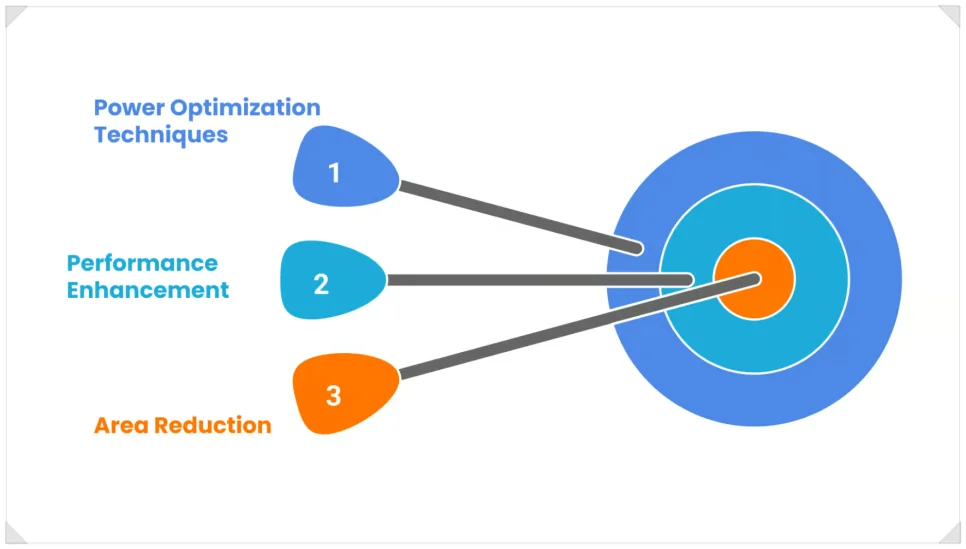
Maestro differs from ordinary coding tools because it ties that verification step to the AI. The technique behind it is closed-loop reinforcement learning, which runs in a cycle:
- The AI proposes a design.
- Specialist tools evaluate it.
- The results go back into training the AI.
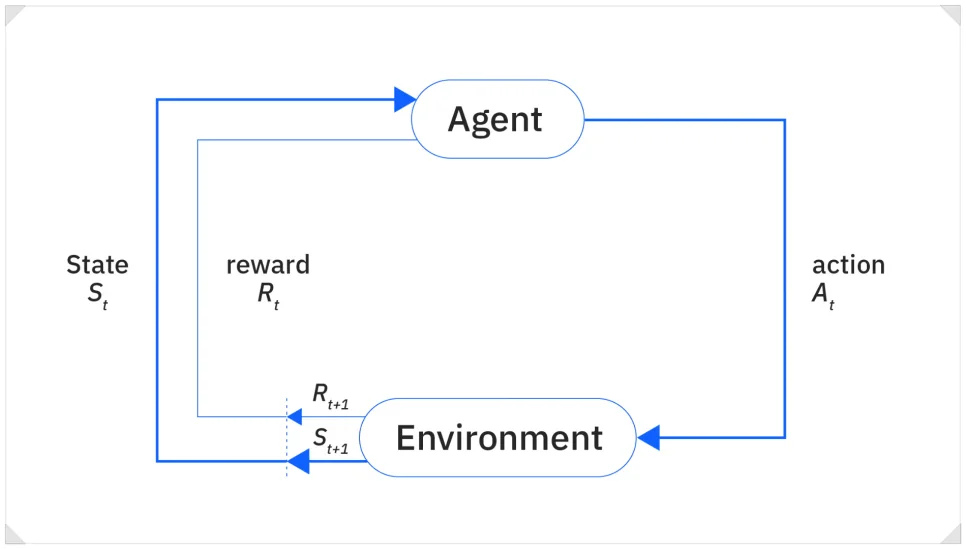
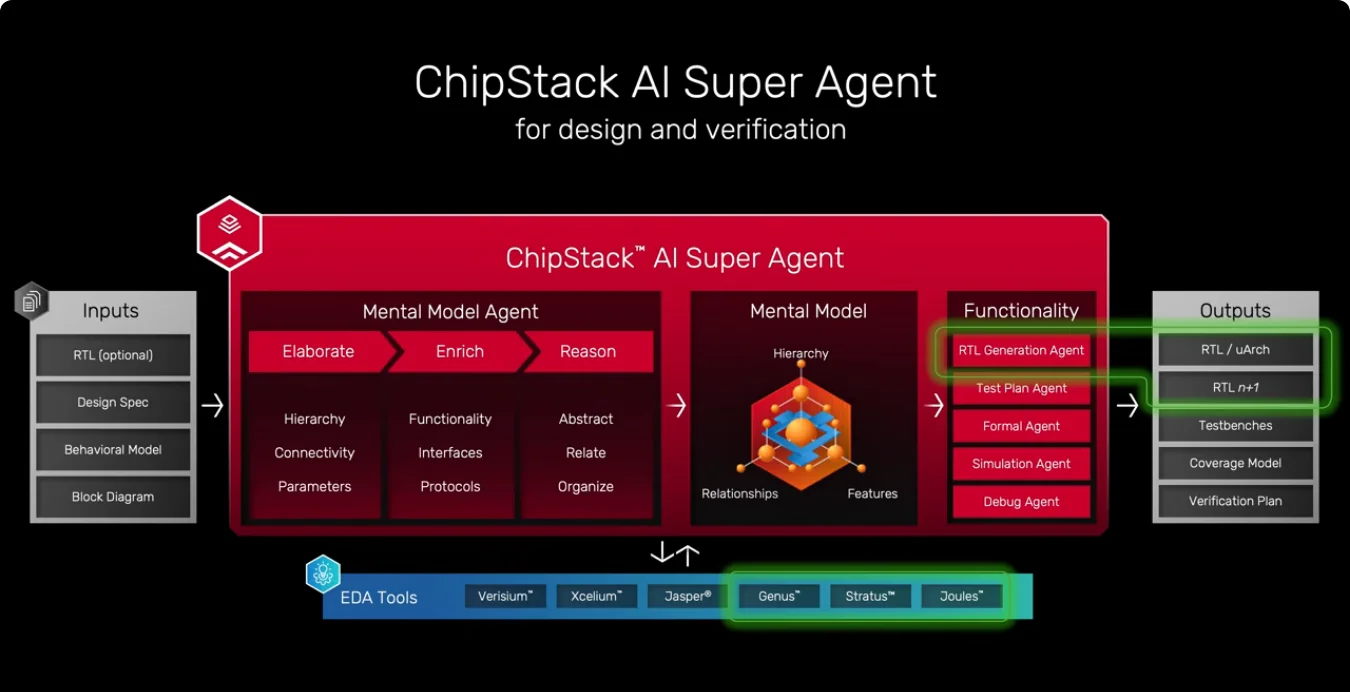
An engineer enters the design goals, and Cadence’s AI Super Agents split the work and pick the models they need. They generate a design and verify it with Cadence’s electronic design automation (EDA) tools. Errors and measurements from verification go back to the AI, which revises the design until it gets close to the target.
Four AI Super Agents take part, each responsible for a different area, with the work divided across circuit writing, physical design and verification:
- ChipStack: writing RTL code, logic verification, error analysis and debugging
- InnoStack: physical placement and routing (P&R) of the circuits inside the chip, plus timing optimization
- ViraStack: analog circuit design and reuse of existing design IP
- AuraStack: system design and analysis, including multi-die and 3D packaging, the kind of advanced packaging behind TSMC’s silicon interposer work with GlobalFoundries
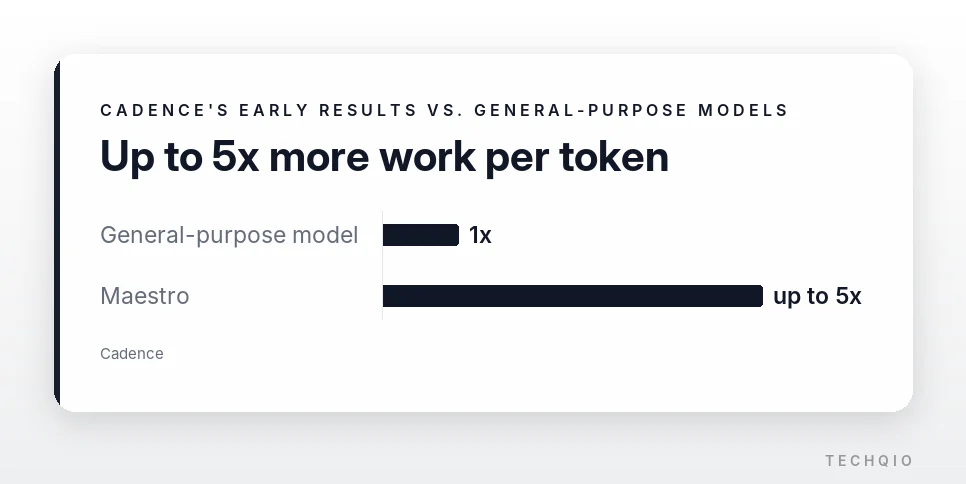
Up to 30% better results and 5x token efficiency
Cadence’s early evaluation numbers stand out. Compared with general-purpose foundation models, Maestro improved quality of results (QoR) by up to 30% and token efficiency by up to 5x, according to Cadence’s Maestro announcement. A token is the basic unit of text an AI model processes. Doing the same job with fewer tokens can lower the cost of running the model.
In chip development, how efficiently the AI uses specialist design tools matters too, because circuit simulation and physical verification take a lot of computing power. Repeating unnecessary analyses or calling verification tools the wrong way wastes that much time and money.
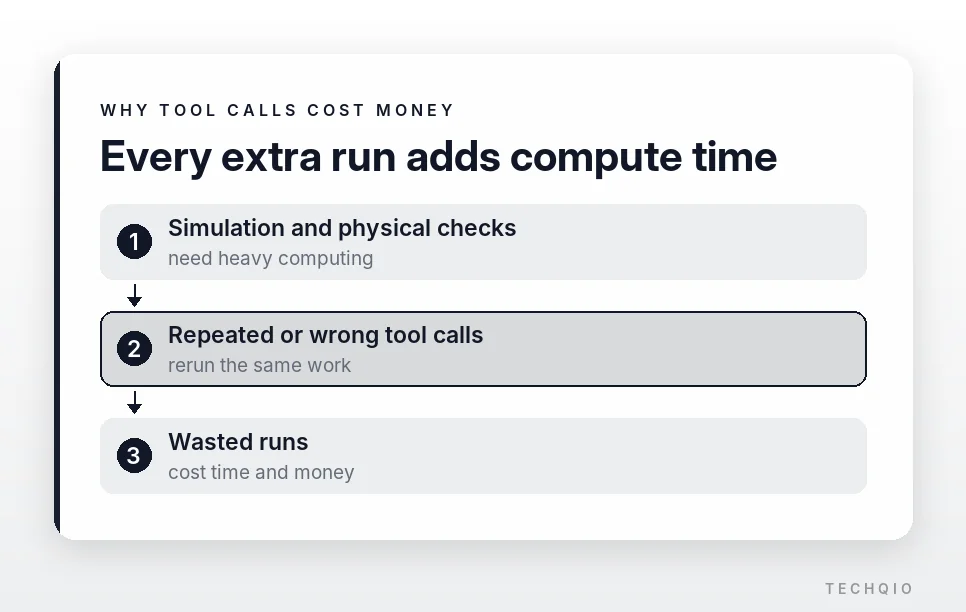
Maestro also orchestrates which AI model handles a task and when to call the specialist tools. Simple tasks go to relatively light models, while work that needs precise verification uses the EDA tools.
The 30% and 5x figures are the best results from early evaluations, so they do not mean every chip design will see the same gains. Real improvements will depend on circuit complexity and process conditions, as well as a team’s existing development environment.
Cadence Maestro vs. GPT-Synopsys
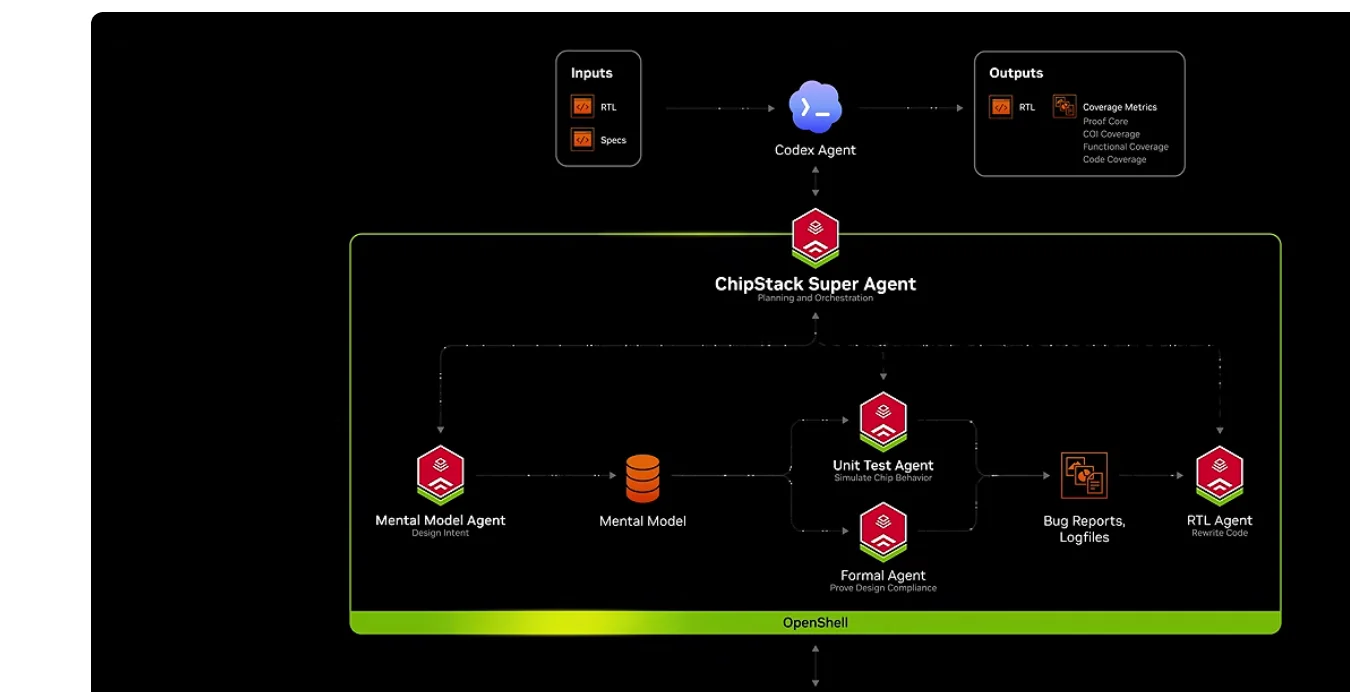
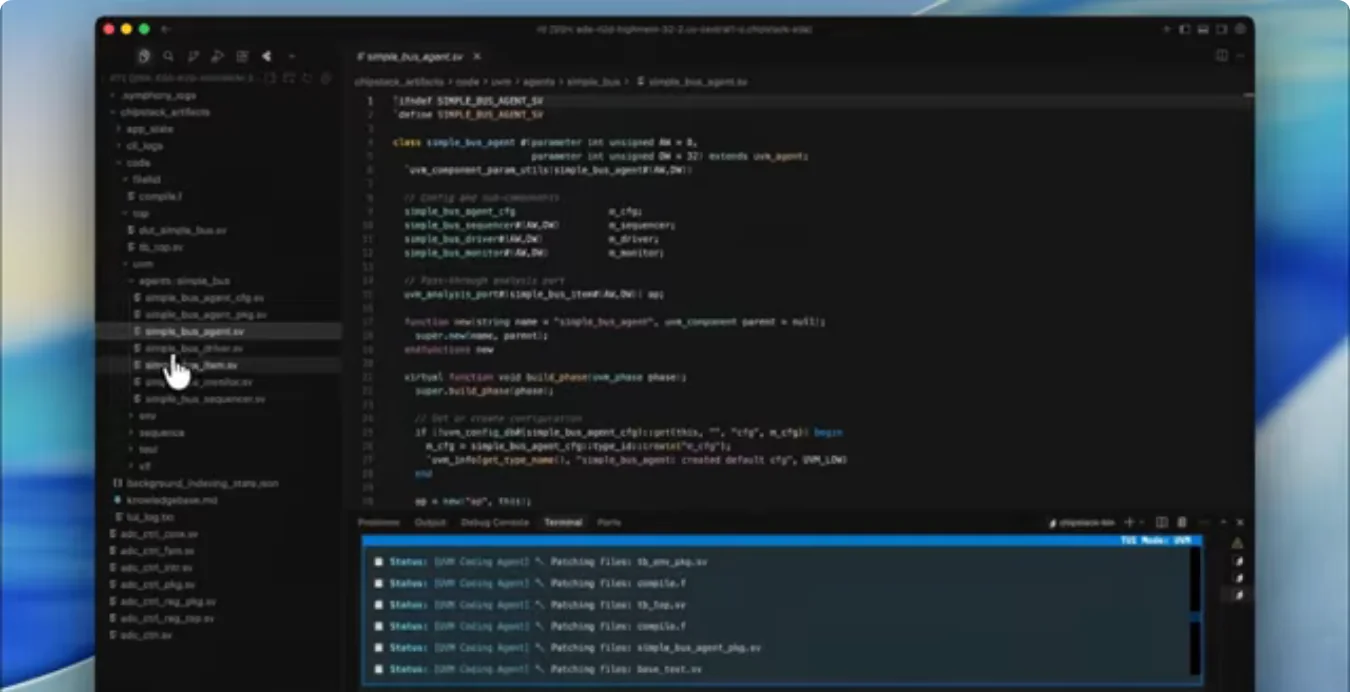
In chip design, security matters as much as performance. Design files such as netlists and process design kits (PDKs) hold a company’s core technology, so leaks are a serious concern. Cadence worked with Nvidia on security and deployment. Maestro uses Nvidia’s open-weight Nemotron models. Cadence is also integrating it with Nvidia’s OpenShell architecture to strengthen agent security. The Nvidia demo below shows Cadence’s ChipStack agents working inside OpenShell.
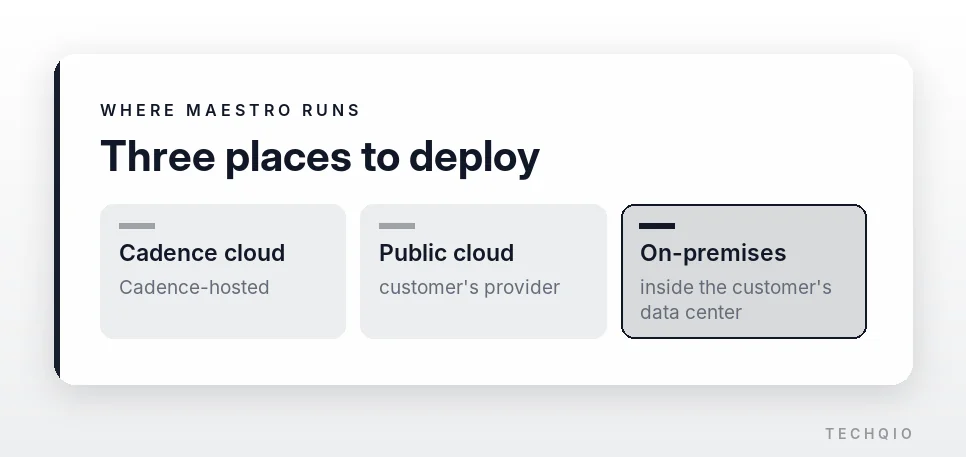
Maestro also lets companies choose where it runs, in the cloud (Cadence’s or a public one) or in their own on-premises data centers. It supports post-training the models on a customer’s own design data, which suits companies that cannot send confidential data outside.
Rival Synopsys took a different route. On Sept. 30, 2026, it announced GPT-Synopsys with OpenAI, connecting OpenAI’s frontier models to Synopsys’s design tools.
| Item | GPT-Synopsys | Cadence Maestro |
|---|---|---|
| Main partner | OpenAI | Nvidia |
| Underlying models | Frontier model | Specialized models including Nemotron |
| Where it runs | OpenAI-hosted infrastructure | On-premises or cloud |
| Customer data | Not used to train the model | Post-training on customer data supported |
| Timing | Technical collaboration and validation underway | Early access in Q4 2026 |
Cadence is putting its weight on supporting many models and deployment setups. Synopsys is building around OpenAI’s high-end models and its existing design tools. Which approach wins will likely depend on each company’s environment. That includes whether it runs its own data centers and how its security policies fit, along with the EDA tools it already uses.

How chipmakers are already using the agents
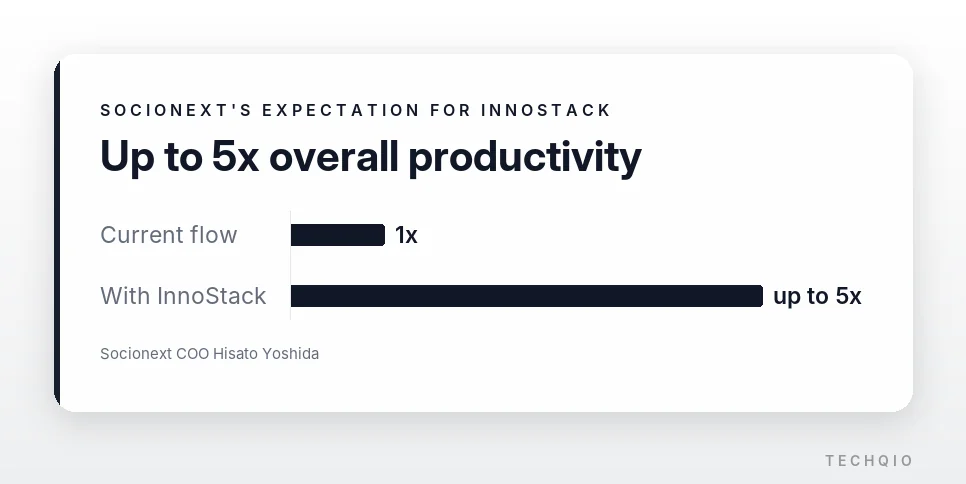
The AI Super Agents that work with Maestro are already in use at some chip companies. Socionext, a Japanese company specializing in custom chips (ASICs), said it is deploying InnoStack in its real design environment. COO Hisato Yoshida said the company expects to raise overall productivity by up to 5x while keeping its existing design quality.
Silicon Labs, which makes ultra-low-power IoT chips, shared its own case. Garima Sharda, vice president of engineering, said ChipStack and Verisium Debug sped up root-cause analysis and debugging. These cases come from the existing AI Super Agents, though, and should be kept separate from any test of the newly announced Maestro models themselves.
Will AI replace chip design engineers, then? Not anytime soon. AI can help with checking error logs and revising design conditions over and over. But setting the goals for the whole system and making the final call on a design are still an engineer’s job.
Can you use Cadence Maestro now?
Early access has started, but only for some customers. Two questions come up most.
How is Maestro different from a regular AI coding tool?
General AI coding tools focus on writing and editing code. Maestro analyzes and improves results with chip design tools, and it feeds the verification results back into training the AI.
Can smaller fabless companies and startups adopt Maestro?
As of Q4 2026, the first Maestro models are offered to select customers through early access. Cadence has not announced a specific schedule for general availability.

What changes for chip designers next
As process nodes shrink and chip structures grow more complex, design and verification take more time and money. Maestro’s pitch is to cut that burden with AI, and fewer repetitive tasks could let engineers focus on the design decisions that matter.

It is still early, though, and how much it helps on real projects is not yet proven. The results to look for from early-access users are concrete. One is whether the claimed QoR and token gains hold on their own circuits. The other is whether on-premises post-training keeps confidential design data in-house. Until then, I see AI here as a useful design tool rather than a replacement for engineers.