Marvell Lumentum Acquisition: Why Nvidia Is Betting on AI Optics
Key takeaways
- The all-stock deal puts an implied $115 billion value on the laser maker.
- Nvidia invested $2 billion in each company in March 2026 to secure lasers and optical links.
- The deal needs shareholder and regulatory approval, with closing targeted for the first half of 2028.
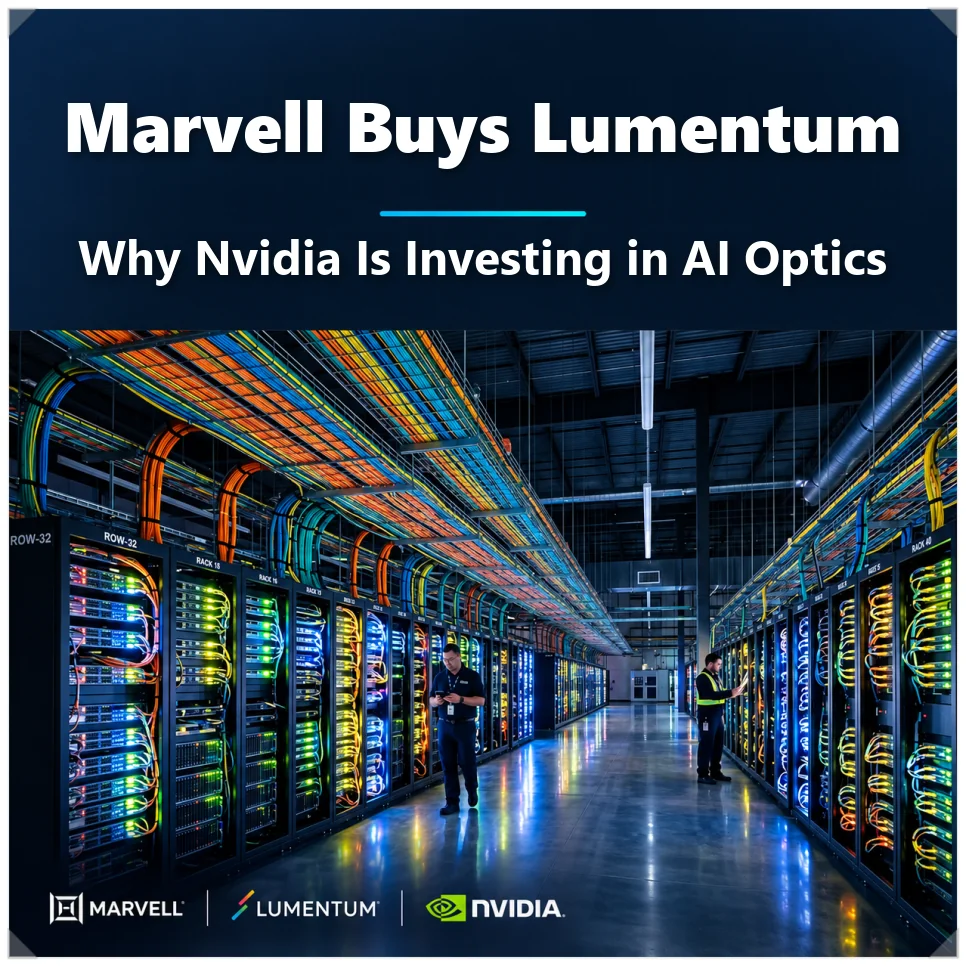
Marvell Technology (MRVL) is buying optical-parts maker Lumentum (LITE) in an all-stock deal that puts an implied enterprise value of $115 billion on Lumentum, and investors sold first and asked questions later. The Marvell Lumentum acquisition, announced Nov. 2, 2026, gives Marvell the lasers that AI data centers need to move data as light.
Nvidia has already put $2 billion into each of the two companies this year. A GPU maker funding lasers says where the AI hardware race is heading. The connections between GPUs now decide how much work the GPUs can do.
Why Marvell wants Lumentum’s lasers
Marvell designs custom chips for AI data centers and the chips that move data at high speed. Lumentum makes the optical parts that send data as light, and its strength is high-performance lasers.
Together, Marvell could develop everything from the chips that process electrical signals to the lasers that create the optical ones. It also gains its own production of key parts that it used to buy from outside suppliers, including Lumentum’s indium phosphide (InP) compound semiconductor manufacturing.
In an AI server, huge numbers of GPUs exchange data at the same time. However fast the GPUs compute, slow data transfer drags down the whole system. That is why optical links are getting so much attention. We looked at the memory side of AI servers in AI Inference Memory: How HBF, CXL and CMX Cut Costs.
The market was not convinced. Marvell shares fell 13.9% during trading on Oct. 29, the day Bloomberg reported the talks. After the deal was announced, Marvell fell more than 12% and Lumentum more than 18%. The deal is paid in stock, not cash.
Marvell Lumentum deal terms at a glance
| Deal term | Detail |
|---|---|
| Implied enterprise value | $115 billion |
| Value per Lumentum share | About $1,132 |
| Exchange ratio | 4.5 Marvell shares per Lumentum share |
| Premium | 23.9% to the Oct. 28 close |
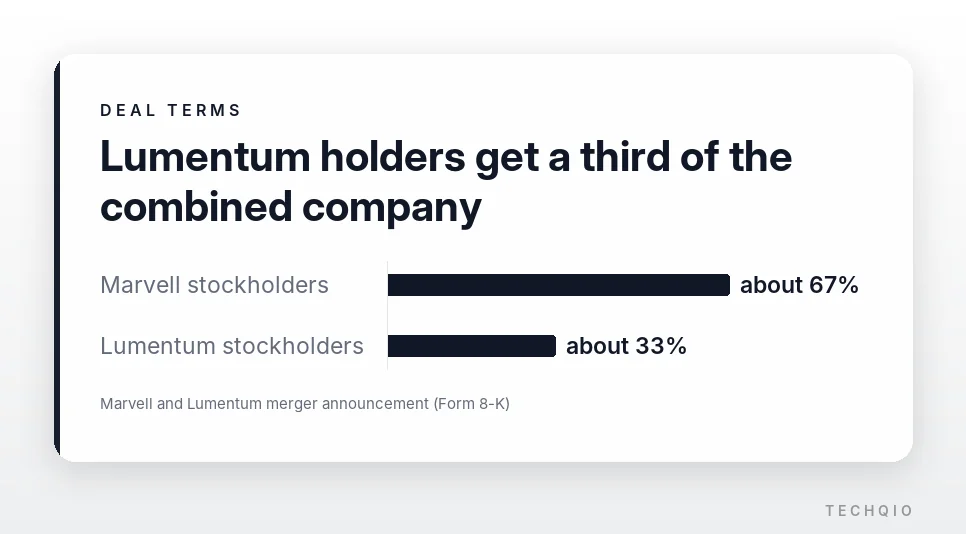
| Ownership after closing | About 67% Marvell holders, 33% Lumentum holders |
| Source | Marvell and Lumentum merger announcement |
The high price and the dilution from new shares weighed on the stocks. Marvell appears to have decided that owning the laser technology is worth that cost.
Nvidia’s $2 billion bets on both companies
Nvidia’s interest does not stop at GPUs. As AI models grow, more data centers link thousands to tens of thousands of GPUs. Splitting one job across that many GPUs takes a network that moves data very fast.
On March 2, 2026, Nvidia invested $2 billion in Lumentum to expand laser production and work together on research and development. On March 31 it put $2 billion into Marvell and started an NVLink Fusion partnership, so that custom AI accelerators can work with Nvidia’s high-speed interconnect.
The Lumentum agreement comes with more than cash. It is a multiyear, nonexclusive deal that includes a multibillion-dollar purchase commitment and capacity rights for advanced laser components, and the money also helps fund a new Lumentum fab in the U.S.
Vera Rubin and the platforms after it need faster and more power-efficient links between GPUs. Electrical signals alone can only be pushed so far. That is why Nvidia is investing in silicon photonics and optical interconnects.
Marvell is a partner and a competitor at the same time, because it designs custom AI accelerators (XPUs) for big tech companies. Nvidia wants to grow the partnership without depending on any one company for key parts. That is also why it works with other optics makers such as Coherent, and Nvidia invested in Coherent as well.
How the copper wall pushes AI servers to light
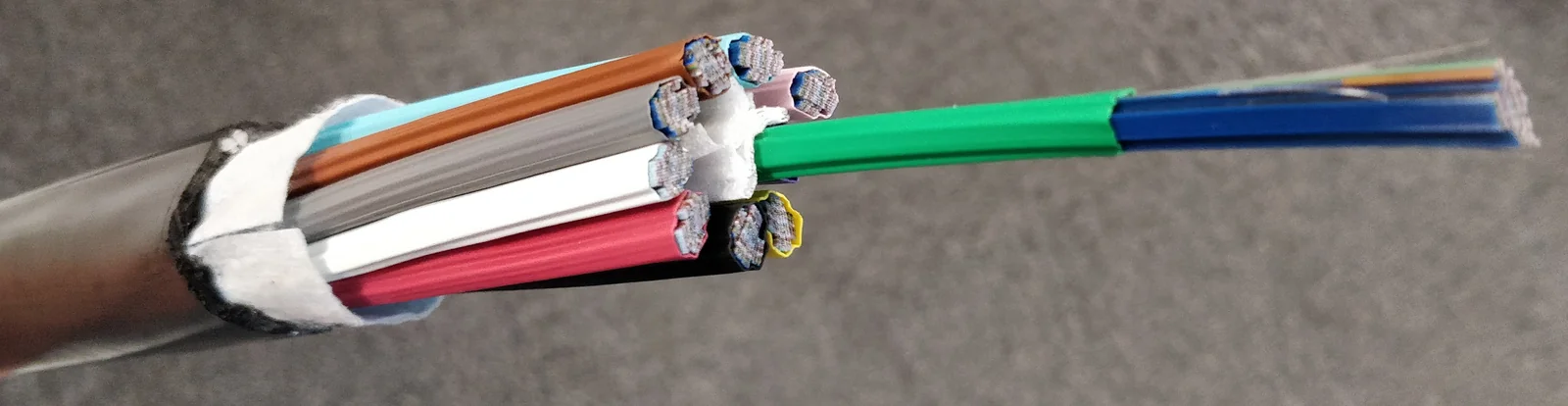
Servers have long carried electrical signals over copper. Now speeds are reaching about 200 Gbps per lane, and optical modules are moving to 1.6T and 3.2T classes. At those speeds, copper is running out of room.
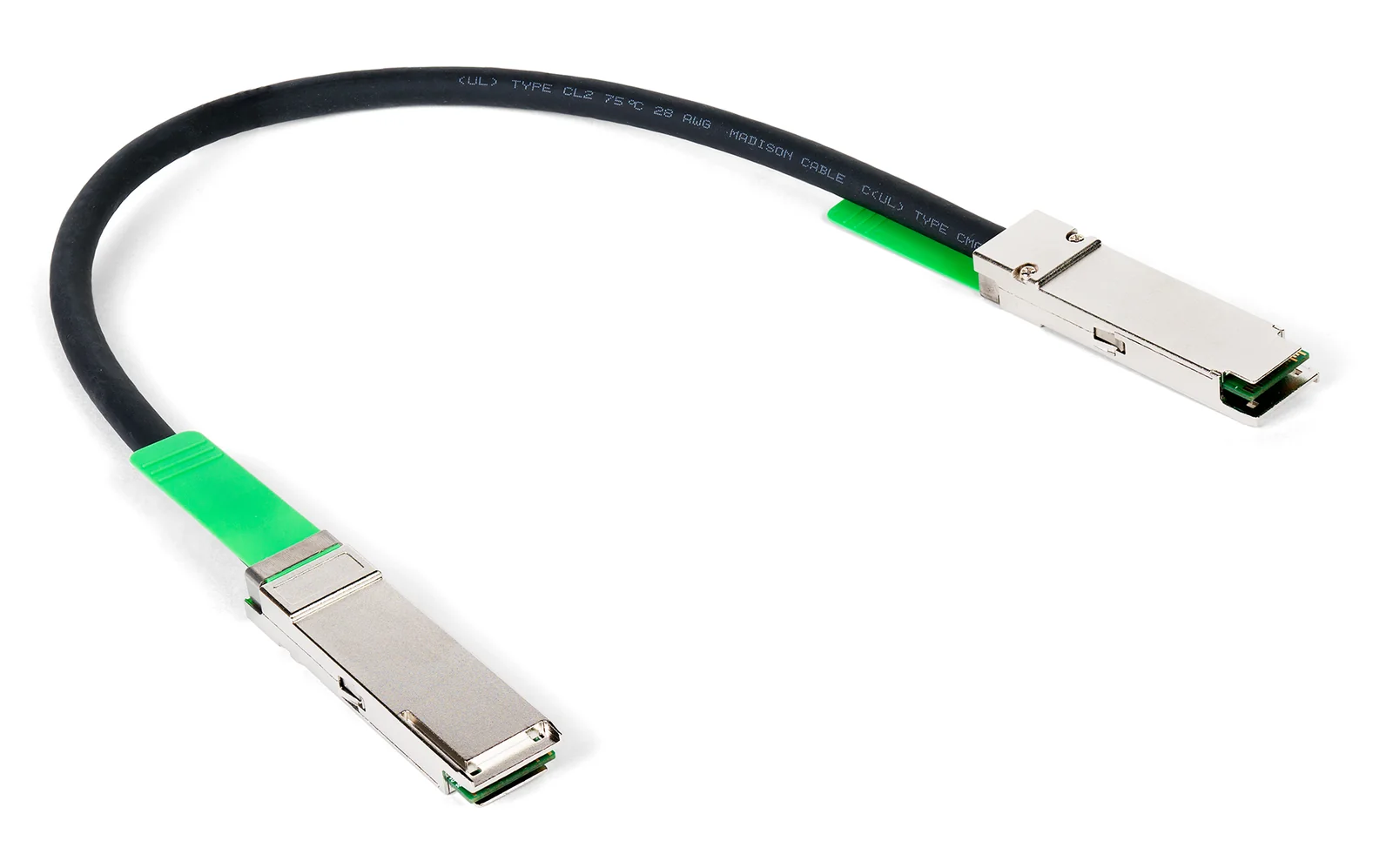
The faster the signal, the weaker it gets and the more easily outside noise disturbs it. Some ultra-fast links can only run reliably for about 3.3 to 6.6 ft (1 to 2 m). Digital signal processors (DSPs) can clean up the signal, but they add power.
The industry calls this limit the copper wall. Sending data as light is one way through it.
How co-packaged optics shortens the trip
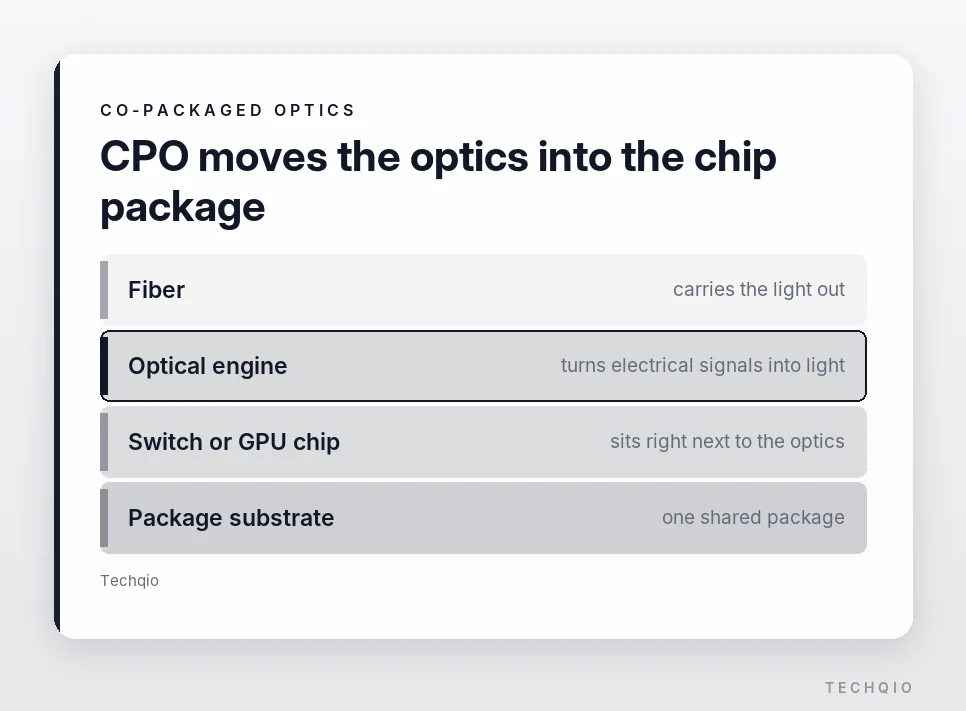
Co-packaged optics (CPO) places the chip and the optical parts close together inside one package. Today the electrical signal leaves the chip, crosses the circuit board and only then reaches a plug-in optical module. CPO cuts that distance, which reduces power loss and signal degradation.
Some designs are projected to use up to 70% less power than pluggable optical transceivers. The real savings depend on the chip design and where it is deployed.
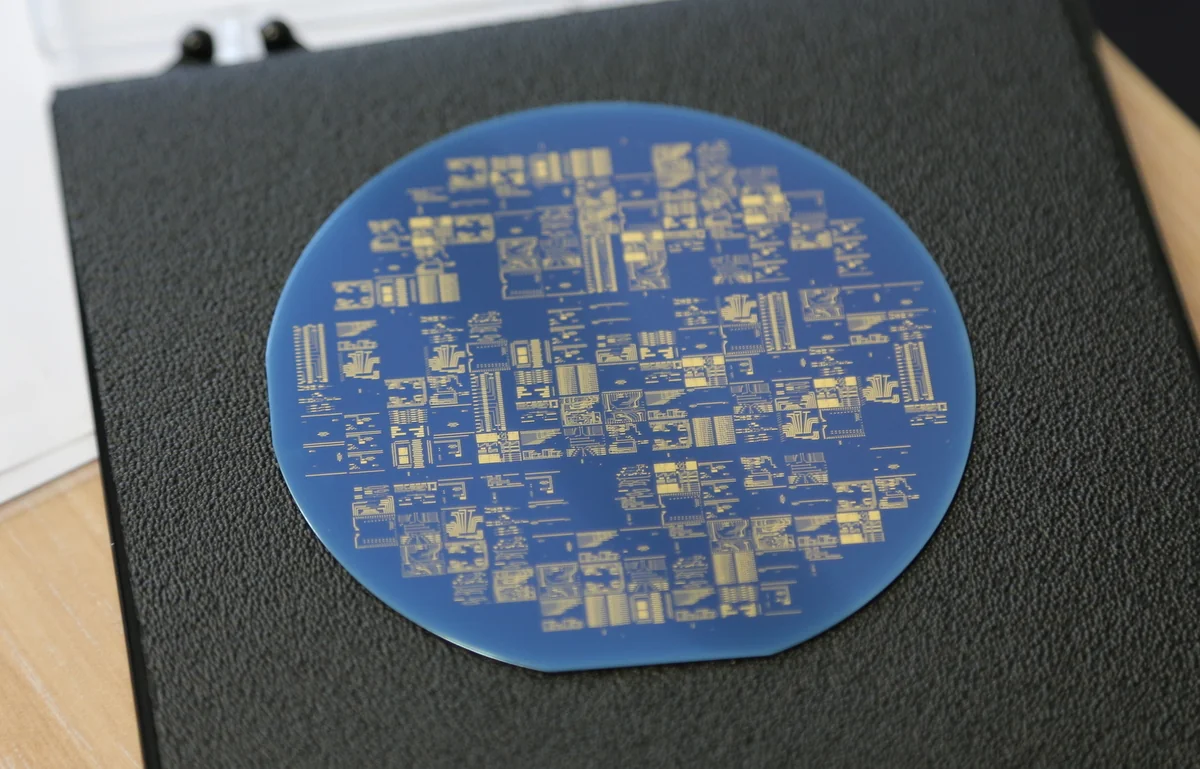
That is where lasers come in. Lumentum runs InP-based laser fabs. The electro-absorption modulated lasers (EMLs) and continuous-wave (CW) lasers used in high-speed optics are hard to make, and adding capacity takes time.
As AI data centers buy more optical parts, the ability to make and ship lasers reliably matters more and more.
How the deal sharpens the race with Broadcom
Broadcom is one of Marvell’s main rivals. With its Tomahawk switch chips, custom AI accelerators and optical technology, it keeps gaining weight in data center chips.
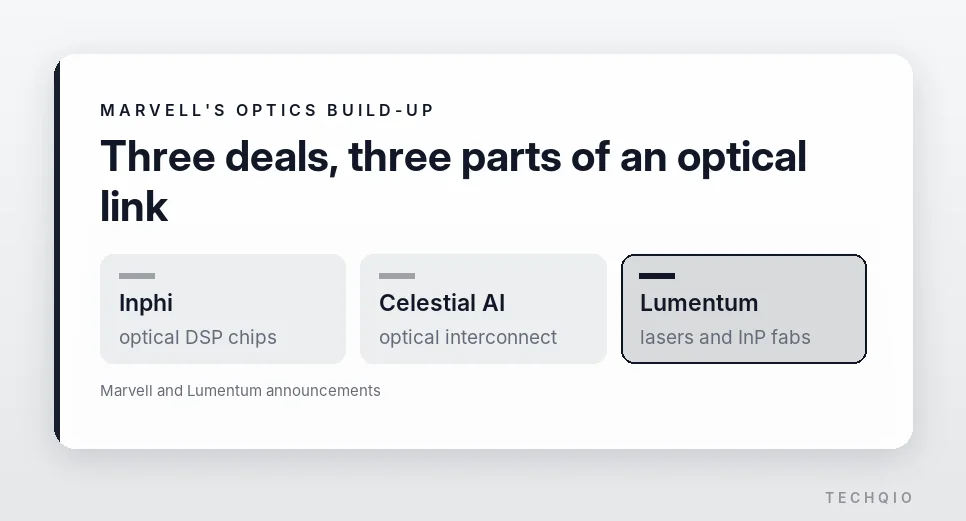
Marvell has been collecting the same pieces. It bought Inphi to build up its optical DSP business, and it completed its acquisition of Celestial AI on Feb. 2, 2026, for optical interconnect technology. Add Lumentum’s laser manufacturing, and Marvell can design and tune chips and optics together. What I’ll watch is whether that actually puts Marvell ahead of Broadcom.
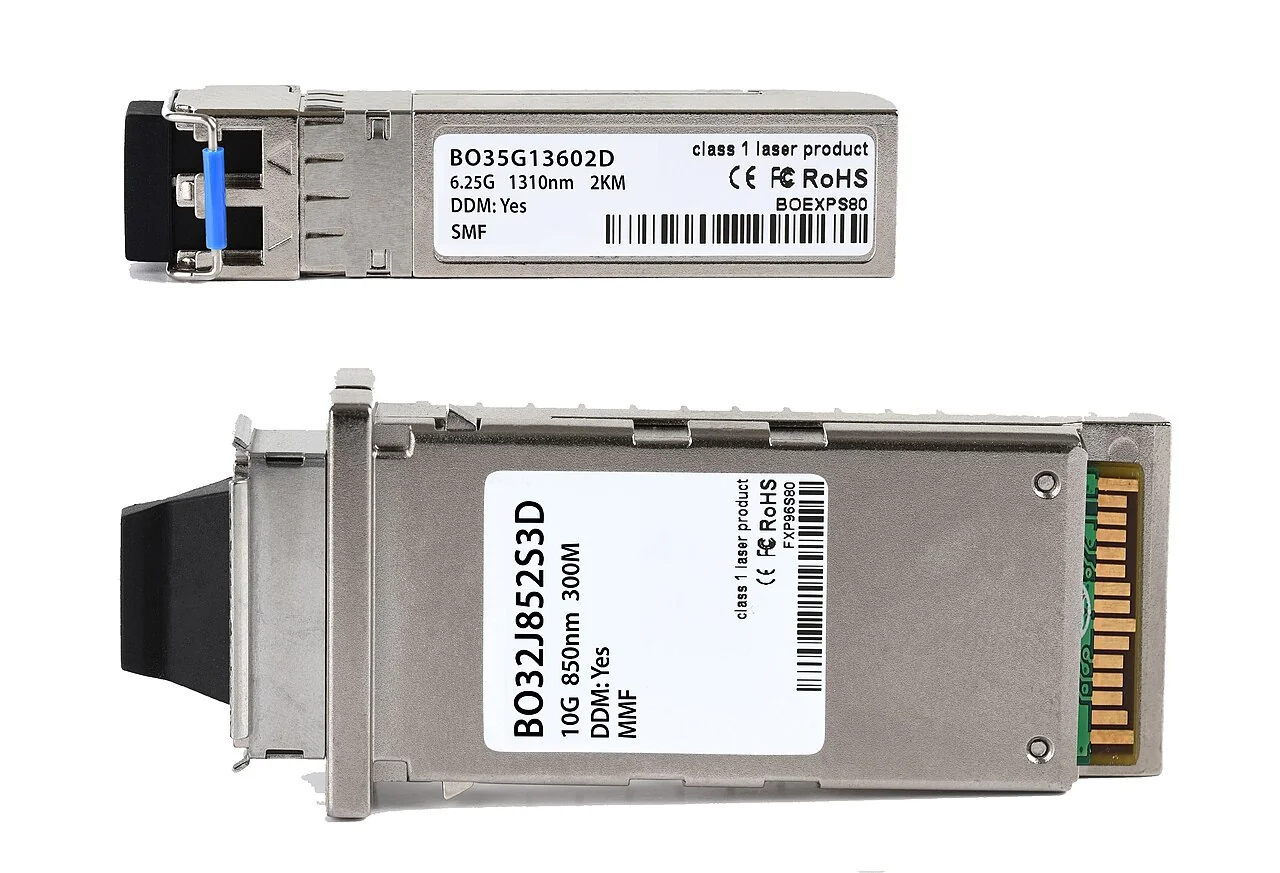
Optical module makers may feel the squeeze. Innolight and Eoptolink have built products with Marvell chips and Lumentum lasers. If Marvell moves into finished modules after the merger, a supplier could turn into a competitor.
Module makers may then spread their orders to Credo and Broadcom for signal-processing chips, and to Mitsubishi Electric and Sumitomo Electric for lasers. How far the supply chain shifts depends on the direction Marvell takes after the merger.
When will the Marvell Lumentum acquisition close?
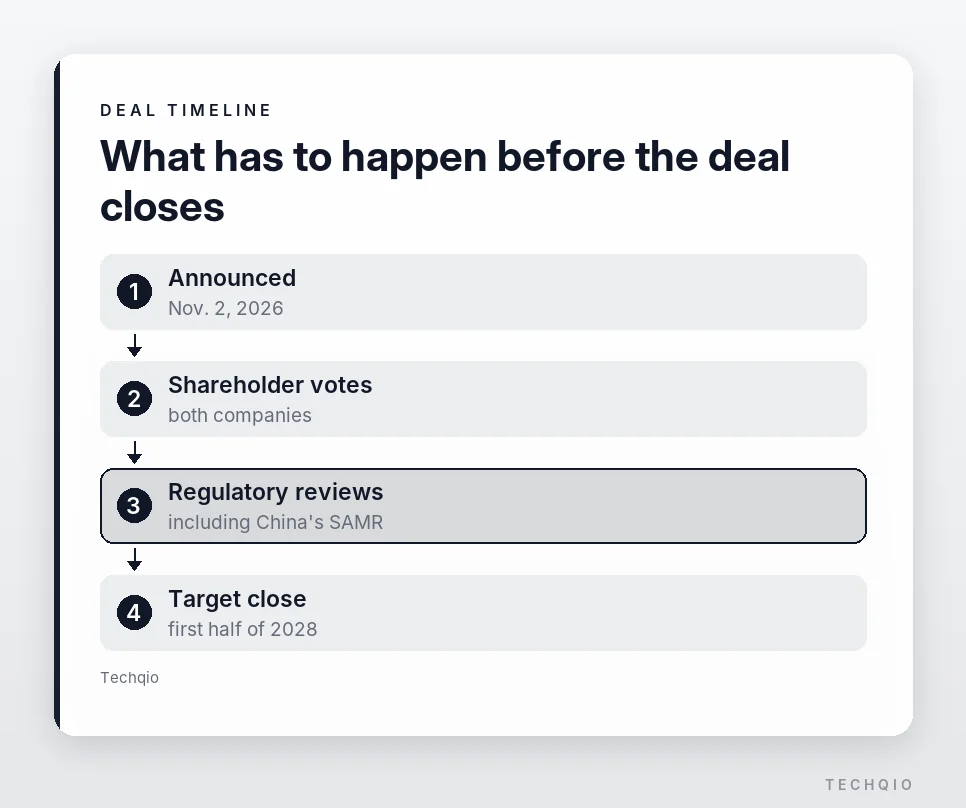
Marvell and Lumentum plan to close the deal in the first half of 2028. Shareholders of both companies must approve it, and regulators in several countries must clear it. The antitrust review by China’s State Administration for Market Regulation (SAMR) is seen as a key variable.
Putting chips and lasers in one company could narrow other manufacturers’ choice of parts. If the review drags on or comes with conditions, the deal could close later than planned.
Is Marvell paying too much for Lumentum’s lasers?
Marvell says the deal brings more than $1 billion in annual run-rate cost synergies and adds to its non-GAAP earnings per share in the first year after closing. Those are the company’s own targets, not results yet.

EML and CW lasers are hard to make, and new capacity for them takes time to build. Lumentum already runs InP laser fabs, which is the part of the deal Marvell could not quickly build on its own. To me, that capacity is worth the high price.
For Lumentum holders, the payment is Marvell stock at a fixed ratio, so what they receive rises and falls with Marvell’s share price until closing. Anyone weighing the Marvell Lumentum acquisition as an investor should watch three things: Marvell’s stock, the shareholder votes and the progress of China’s review.