Anthropic’s Q3 Revenue Hit $16.8 Billion. Why AI Bubble Fears Are Growing Anyway
Key takeaways
- Anthropic’s Q3 2026 revenue reportedly hit $16.8 billion, with an adjusted operating margin of 11%.
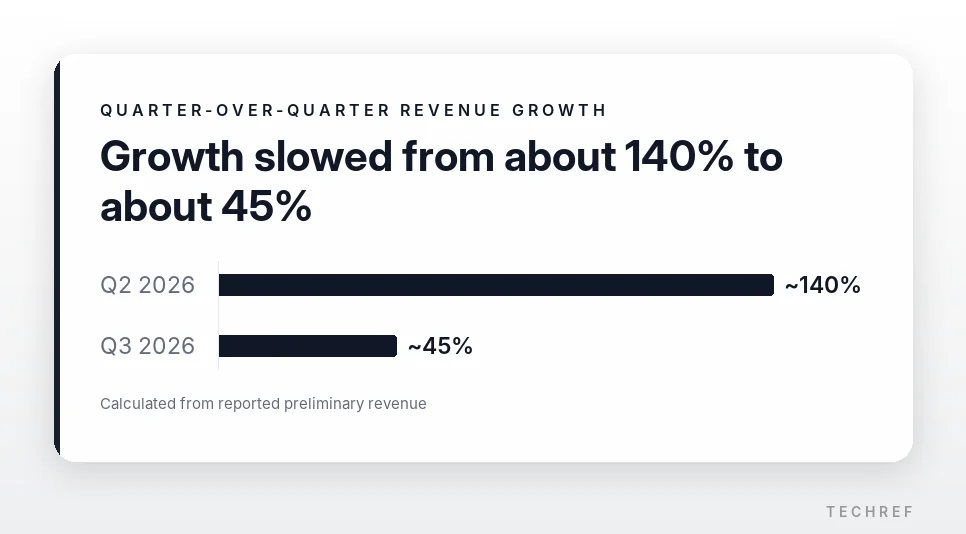
- Quarter-over-quarter growth slowed from over 140% to about 45%, as cheaper models and caching cut costs.
- About $518 billion in mostly fixed compute commitments keeps the AI bubble debate alive.
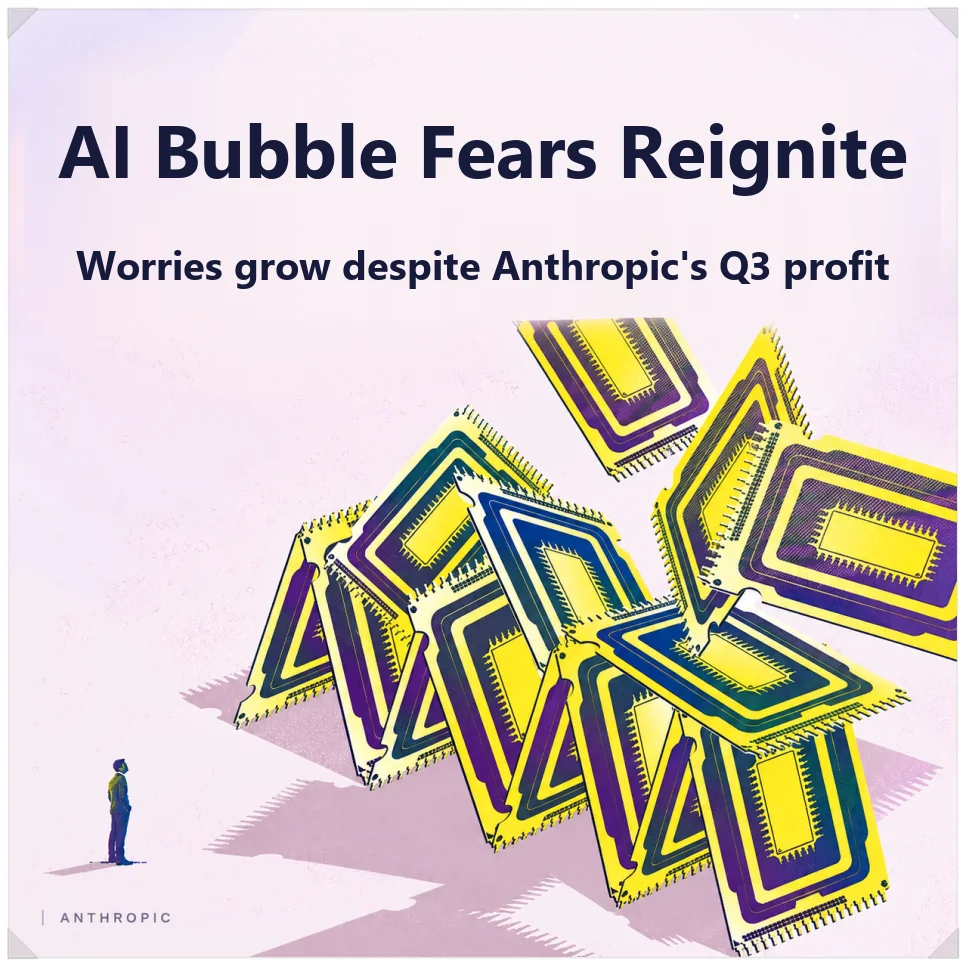
AI investment keeps climbing, and so do the doubts. GPUs and data centers cost so much that many people wonder whether the spending will ever pay off. That’s why talk of an “AI bubble” won’t go away, and the latest Anthropic Q3 revenue figures add fuel to both sides of the argument.
Preliminary third-quarter 2026 results for Anthropic, the company behind Claude, have surfaced. Revenue reached $16.8 billion, and Anthropic reportedly turned a profit on an adjusted basis. Yet the AI bubble debate has flared up again, and the numbers show why.
Anthropic Q3 revenue: how fast is it growing?
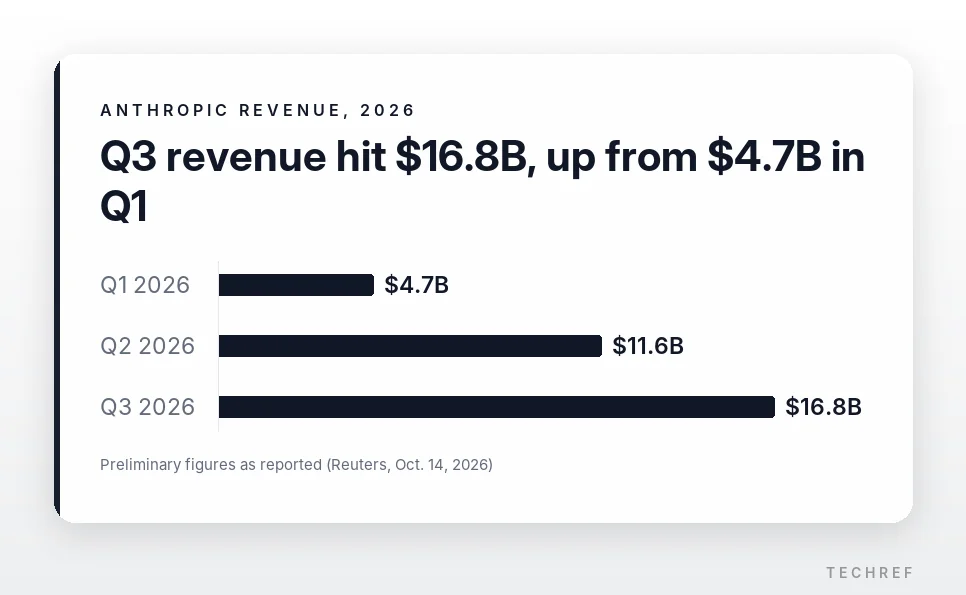
Revenue has climbed steeply. It rose from about $4.7 billion in Q1 2026 to $11.6 billion in Q2 and $16.8 billion in Q3. That single quarter is more than three times Anthropic’s full-year 2025 revenue of roughly $4.6 billion.
Annualized revenue (ARR) has reportedly passed $65 billion. ARR assumes the current revenue pace holds for a full year.
Profitability improved along with revenue. Anthropic reportedly brought in $1.70 in revenue for every $1 it spent on compute. Customers paid more than it cost to run the AI models serving them.
Adjusted gross margin reportedly topped 85%, and adjusted operating margin reached 11%. That’s a big change from 2025, when Anthropic posted an operating loss of more than $8 billion.
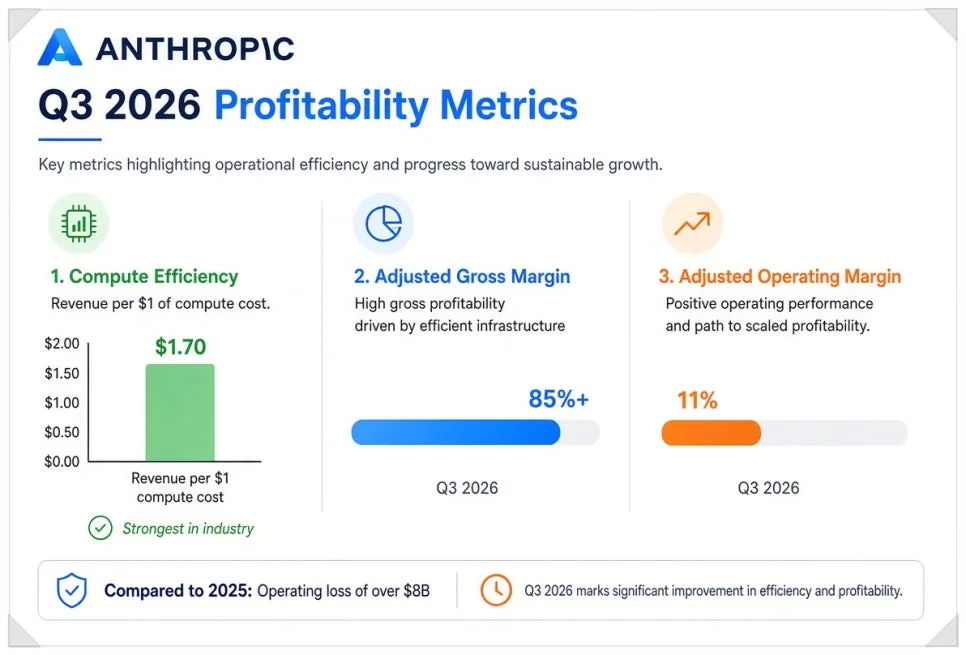
Judging profitability by comparing the cost of running a service with the revenue it brings in is called unit economics. Building and training models costs a fortune, so what matters is whether the service turns a profit once it’s actually running.
| Metric | Q1 2026 | Q2 2026 | Q3 2026 |
|---|---|---|---|
| Preliminary revenue | $4.7B–$4.8B | $11.5B–$11.6B | $16.8B |
| Quarter-over-quarter growth | — | About 140%–143% | About 45%–46% |
| Adjusted operating margin | Operating loss | Turned profitable | 11% or more |
| Revenue per $1 of compute | Not disclosed | Not disclosed | $1.70 |
Why the AI bubble debate is back despite the profit
Revenue and profitability improved, but growth slowed noticeably. Quarter-over-quarter growth fell from over 140% in Q2 to about 45%–46% in Q3.
Revenue is still rising. But given the enormous amounts of money pouring into AI, it’s fair to ask whether that kind of growth can last.
About 80% of Anthropic’s revenue comes from business customers (B2B) and developer API usage rather than consumers. Its AI coding tool, Claude Code, has reportedly passed $2.5 billion in annualized revenue on its own.
Claude Code analyzes and edits source code and runs tests. It uses far more tokens than a typical chatbot conversation, so AI usage rises as companies give it more development work.

More usage doesn’t mean equally more revenue
That said, revenue doesn’t grow at the same rate as usage.
Companies are lowering their AI costs with techniques such as prompt caching, which reuses repeated input, and model distillation, which transfers a large model’s abilities to a smaller one.
Anthropic itself released Claude Haiku 5.5, a lightweight model, on Oct. 7, 2026. According to Anthropic’s announcement, it costs about 75% less to run than Haiku 4.5 on average, and 90% less for requests of up to 100,000 tokens. When the price per token drops, revenue can grow more slowly even as the workload grows.
So slower growth alone doesn’t prove that AI demand is shrinking. Companies are using more AI while spending less per task, so revenue can grow more slowly than usage.
A $518 billion infrastructure bill: are custom chips the answer?
Data center infrastructure is another burden for Anthropic.
Anthropic has reportedly signed about $518 billion in infrastructure contracts over the next 10 years with providers including Google Cloud and Amazon Web Services (AWS). Roughly 80% of that is reportedly a fixed commitment that must be paid regardless of actual usage. Reuters, citing Anthropic’s confidential IPO filing, put Google’s share at at least $111.1 billion and Amazon’s at $110 billion.
Even with better margins today, those commitments could become a heavy financial burden if AI usage doesn’t grow as expected. That’s why one profitable quarter won’t put the bubble debate to rest.
To cut operating costs, Anthropic is also developing its own AI chips. It hired Clive Chan, who led chip development at OpenAI, and is working with Broadcom on an ASIC (a custom chip built for one job) dedicated to inference. Chips tailored to its own models would reduce its dependence on Nvidia GPUs and lower costs.

Broadcom is also building chips with debt raised through special purpose vehicles (SPVs) worth tens of billions of dollars and leasing them to Anthropic.
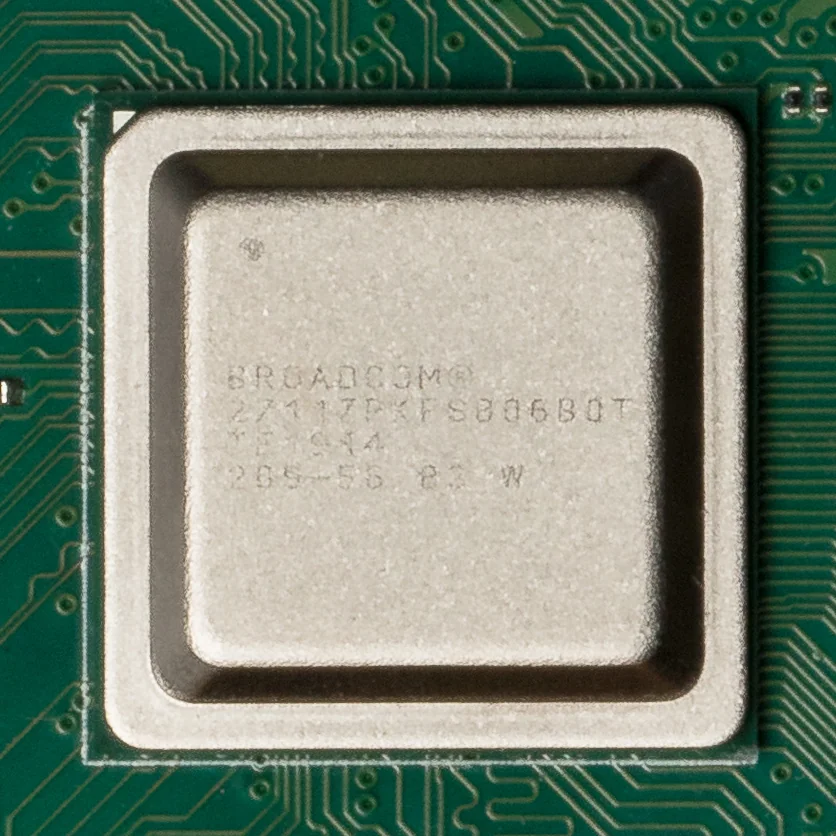
If the chip program goes to plan, it could help cut costs over the long run. But taking a chip from design to mass production takes considerable time and money, so the savings won’t show up until the chips reach mass production.
What it could mean for Samsung, SK hynix and Micron
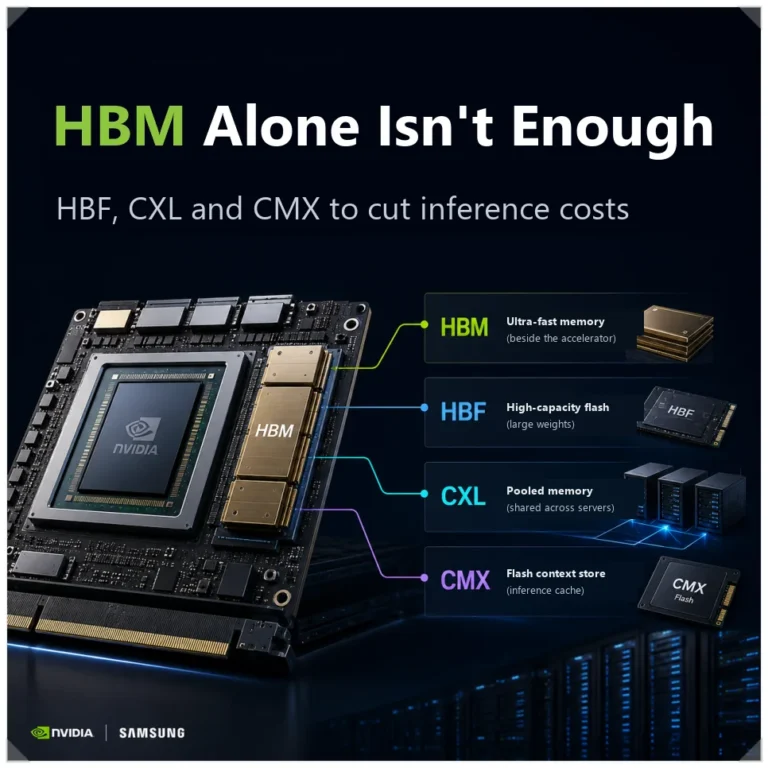
Anthropic’s chip push could open new opportunities for memory chipmakers, including Korea’s Samsung Electronics and SK hynix. The focus is on high-bandwidth memory (HBM), the stacked DRAM that sits next to AI processors, and on the foundry (contract chip manufacturing) business.
Anthropic is reportedly preparing to buy HBM and high-performance server DRAM directly from 2027, without going through server makers or Nvidia.
Samsung Electronics, SK hynix and Micron also reportedly took stakes in Anthropic as strategic partners in its Series H funding round. Korea JoongAng Daily reported that the round raised $65 billion at a $965 billion valuation.
Anthropic’s custom accelerator is expected to carry 192GB to 288GB of fifth-generation HBM (HBM3E) per chip. If production of its own AI chips ramps up, memory makers could gain a major new customer.
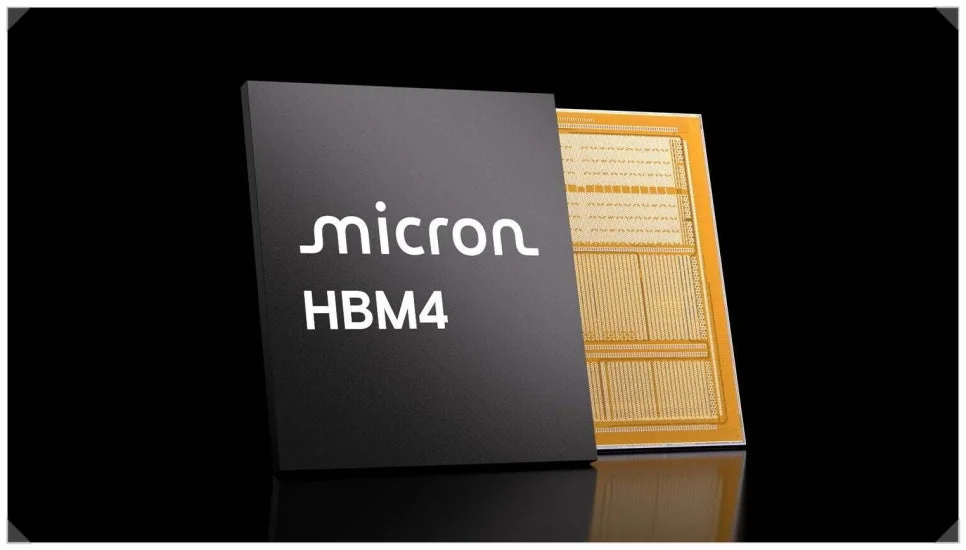
Samsung could also gain in its foundry business. TSMC’s advanced packaging capacity is stretched by orders from global big tech companies, and Anthropic has reportedly been considering Samsung’s 2nm (SF2P) process.
Samsung’s advantage is that it can offer advanced chip manufacturing, HBM3E supply and packaging together. If that leads to an actual contract, it could help both its memory and foundry businesses. Of course, not every partnership being discussed now will turn into a deal.
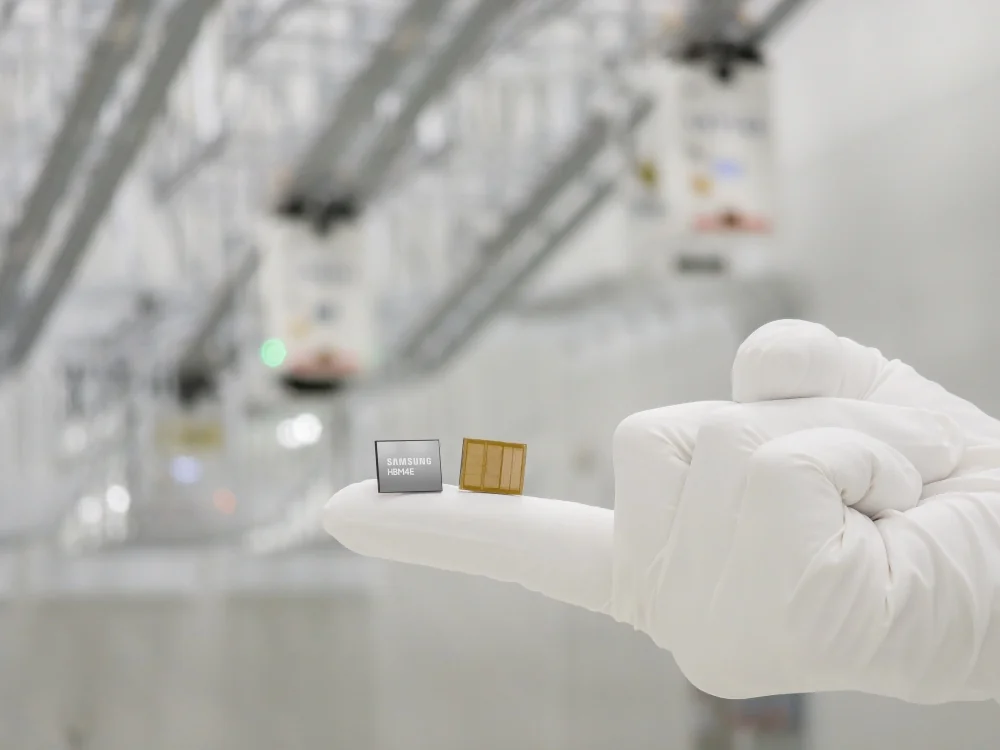
Bottom line: lasting profit is what counts
The Anthropic Q3 revenue figures show that an AI service can earn real money and turn a profit. But with growth slowing and $518 billion in long-term infrastructure commitments, the AI bubble debate is unlikely to fade any time soon.
From here, how reliably AI models make money will matter as much as how capable they are. Cost savings from custom AI chips and HBM will also shape who stays competitive, and memory makers such as Samsung, SK hynix and Micron stand to gain if Anthropic’s own chips reach volume.
Related reading
- PHP2Shell Vulnerability: The 14-Year-Old PHP Flaw AI Found and How to Patch It
- Tesla Renames FSD to ‘Tesla Assisted Driving’ in Europe: Why It Changed
Sources
- Introducing Claude Haiku 5.5 – Anthropic
- Anthropic's $518 bln AI buildout hinges largely on deals that cannot be canceled (Reuters)
- Samsung, SK hynix back Anthropic in $65B round (Korea JoongAng Daily)
- Anthropic's Q3 revenue surges 45% to nearly $17 billion (Reuters via Investing.com)
- Anthropic Q3: Spectacular Numbers, Harder Questions (Investing.com)
- Anthropic raises $30 billion Series G funding (Anthropic)