
Genesis GV90 Without a B-Pillar: How the Coach Doors and Roof Airbag Keep It Safe
Key takeaways
- The GV90 Neolun drops the B-pillar; its front and rear doors open independently.
- A dual-motion hinge, hidden roll cage and 1.8 GPa door beams replace the pillar’s job.
- It adds what Genesis calls the first production roof airbag; US arrival is early 2027.

The Genesis GV90 drops the B-pillar, the post between the front and rear doors that holds up the roof and spreads the force of a side crash. Without it, the doors can open far wider, but keeping the body safe gets much harder.
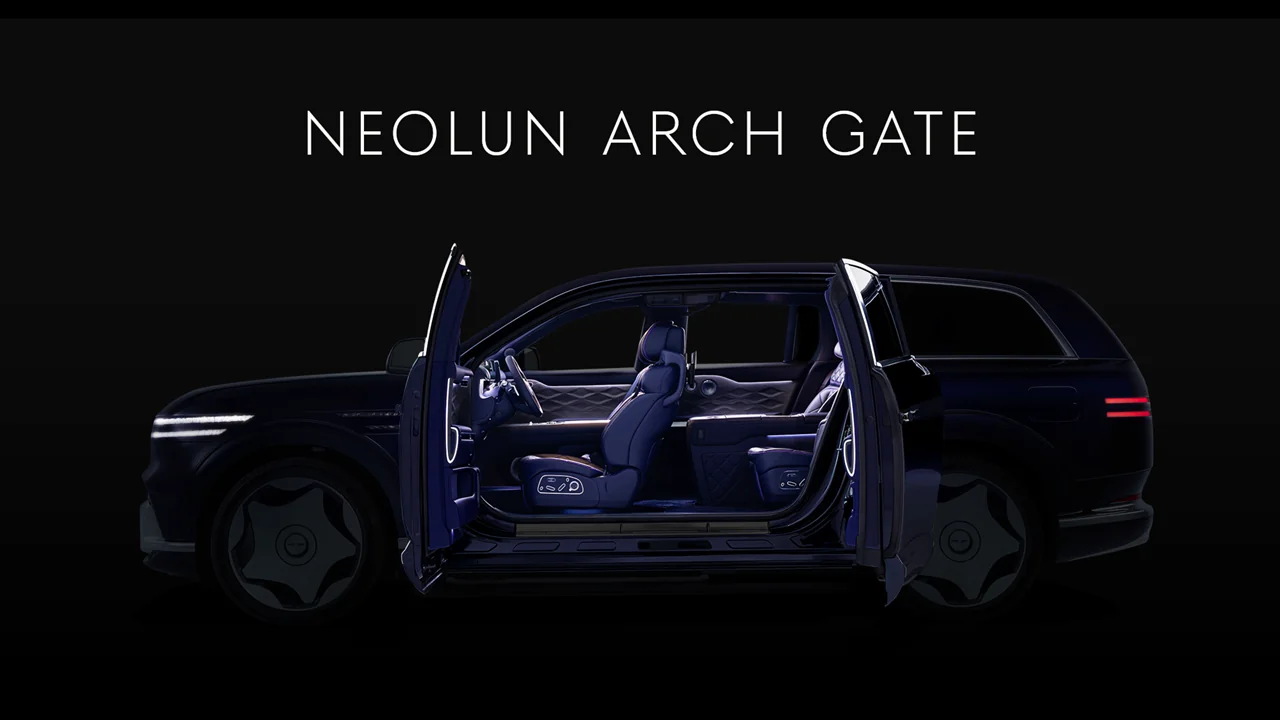
At its GV90 Tech Day at Inspire Resort in Incheon, Genesis showed how it engineered the body around coach doors it calls the Neolun Arch Gate, where the front and rear doors open independently.
What the B-pillar does, and why removing it is hard
In a typical SUV, the B-pillar ties the roof to the floor and keeps the body from twisting. In a side impact, it also channels the force into the roof and floor.
Removing it opens up the entry, but the roof gets harder to keep stiff. Sealing the seam where the front and rear doors meet against noise and rain is another problem to solve.

Some luxury cars with coach doors, such as Rolls-Royce models, still keep a B-pillar. The GV90’s Neolun Arch Gate instead lets the front and rear doors open on their own. In the US, Genesis lists the 2028 GV90 as arriving in early 2027, with the Neolun Arch Gate doors on Neolun trims. It has not announced a US price. The standard GV90 keeps conventional doors.
With no center post, the body has to be stiff enough once the doors close, so Genesis developed a new door and body structure for it.

The dual-motion hinge that opens a 154-lb door
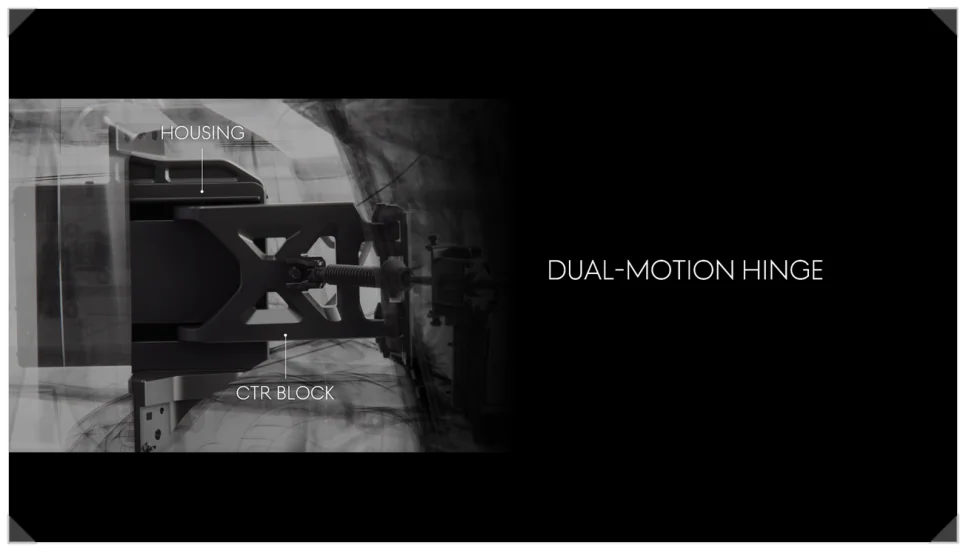
Each rear door weighs 70 kg (about 154 lb). On a conventional hinge it could swing wide, hit the front door or take up a lot of space beside the car, so the engineers borrowed a linear motion guide, the rail-and-ball-bearing slide used in machine tools and industrial robots.
The resulting dual-motion hinge first slides the rear door outward, then swings it open. That lets the front and rear doors open independently without touching each other.
The doors lock differently too. Instead of latching to a B-pillar, each door has latches at the top and bottom that a multi-release controller frees at the same time, and dual cinching soft-close pulls the door shut evenly.
The door sensor hides behind the lower chrome trim. A “chrome crack” process leaves tiny gaps in the plating so radar can pass through, which keeps the sensor out of sight.
A hidden roll cage in place of the B-pillar
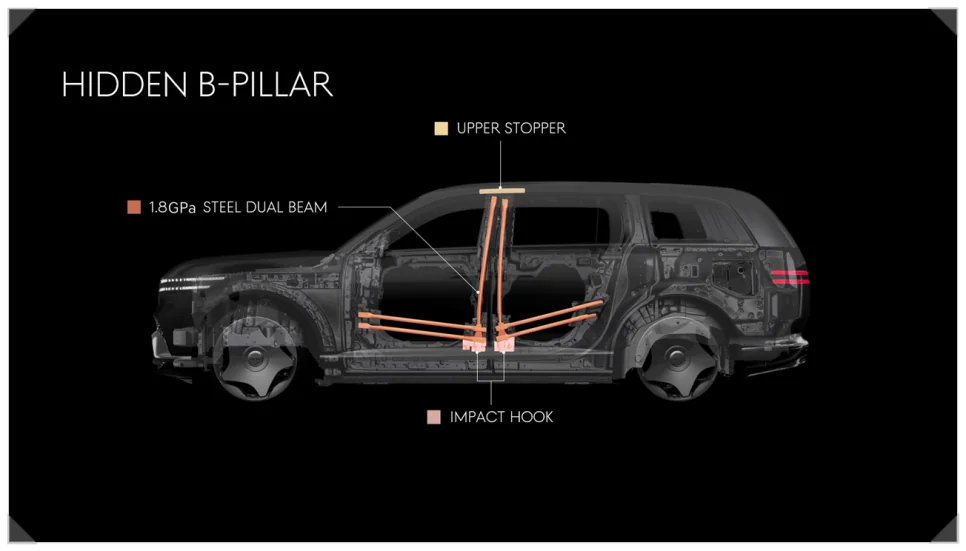
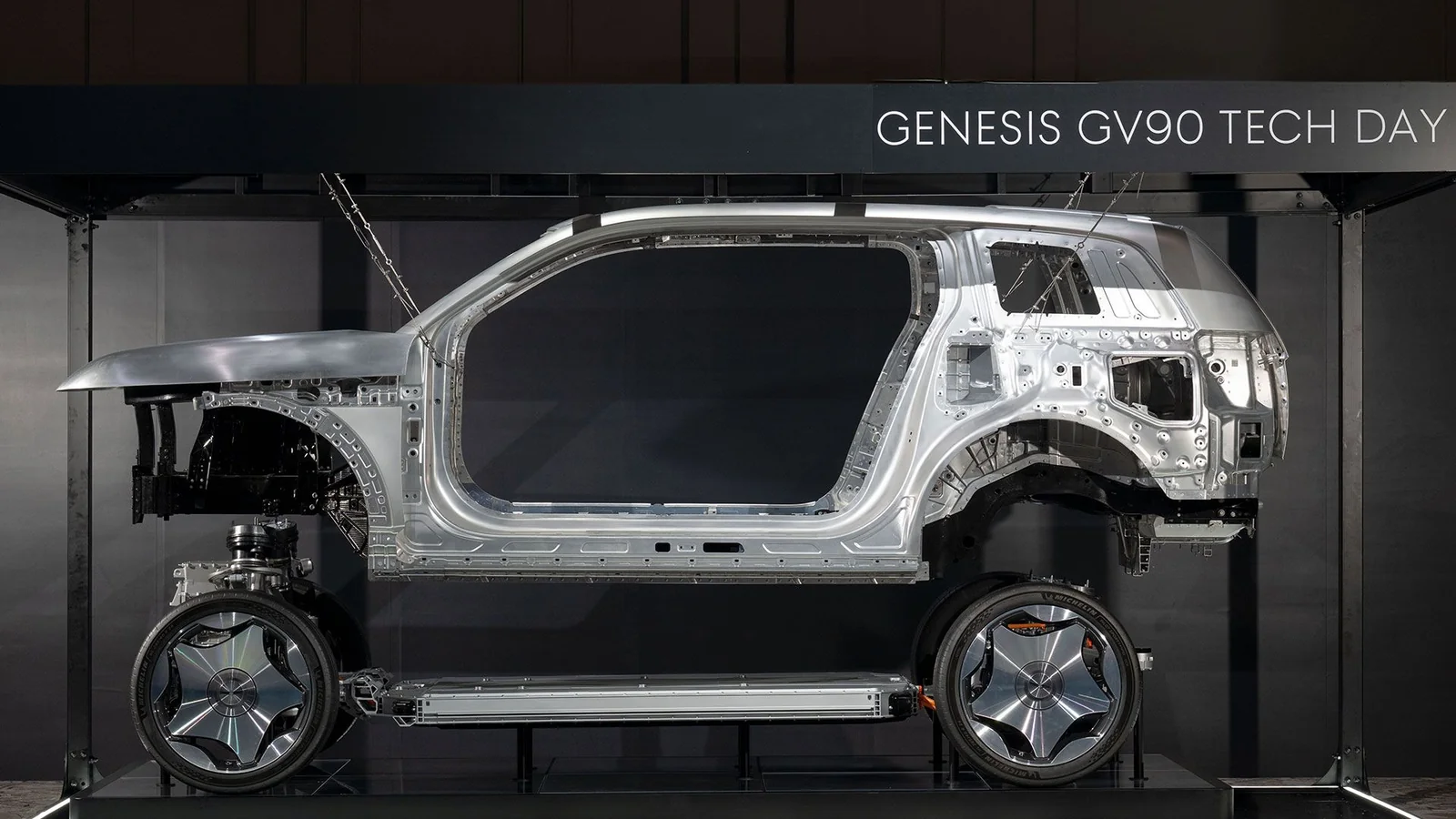
The missing pillar is made up for inside the body. Taking a cue from motorsport roll cages, Genesis runs a 2.5 m (8.2 ft) high-strength steel tube from the base of the A-pillar along the roof rail to the rear, and fills the joints with structural foam.
Inside each door, 1.8 GPa ultra-high-strength steel dual beams and impact hooks are arranged vertically and horizontally. They help reduce door intrusion into the cabin in a side crash and spread the load.
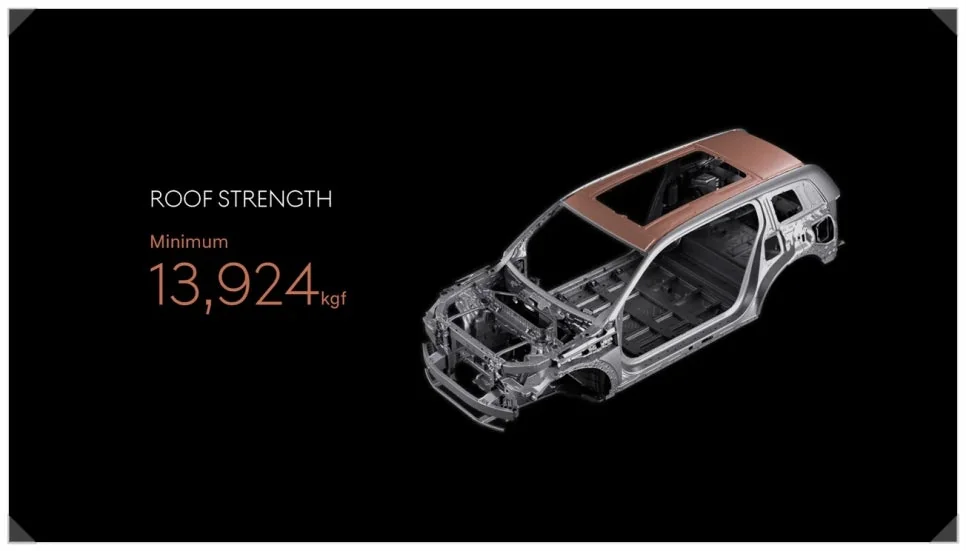
Getting there wasn’t easy. In the first test about four years ago, the real body bent differently from the simulation. After reinforcing the structure, it withstood more than 14 tf (about 30,900 lb) of vertical load on each side in Genesis’s own roof-strength test.
In a 60 km/h (37 mph) perpendicular side-impact test, the doors stayed shut and the cabin kept at least 320 mm (12.6 in) of survival space.
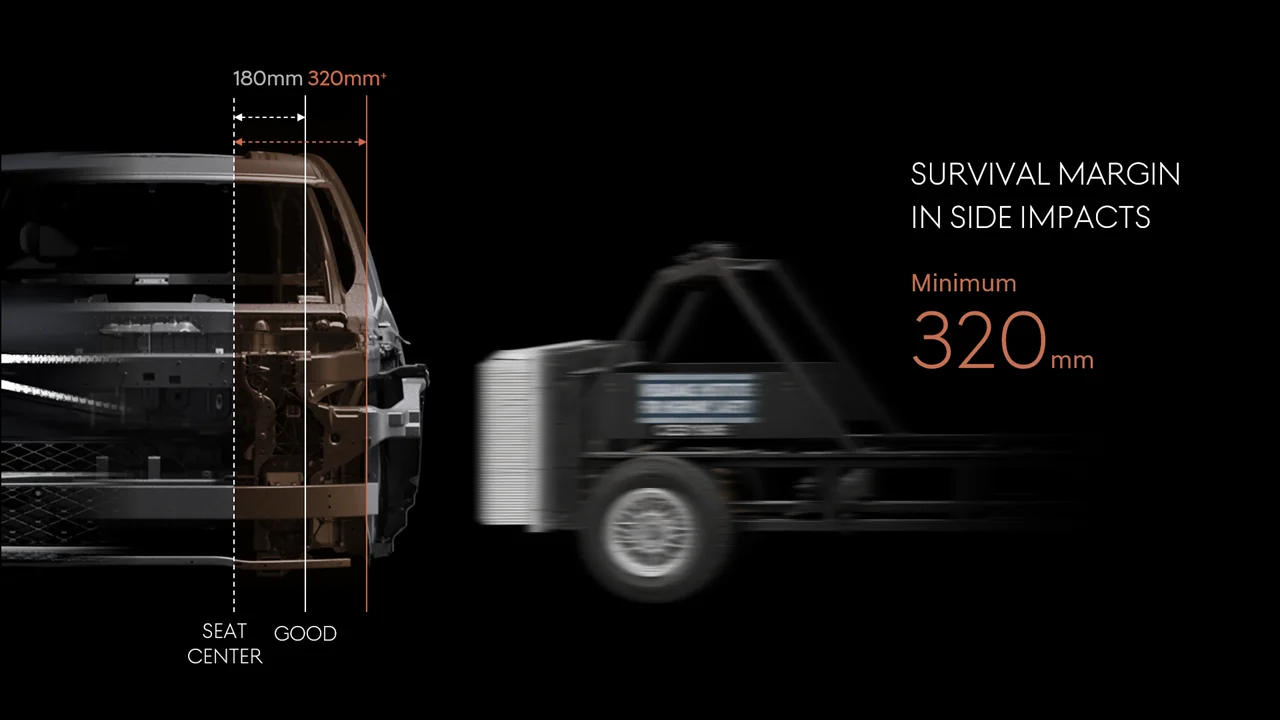
Here is how the GV90’s body compares with a typical SUV:
| Feature | Typical SUV | GV90 Neolun |
|---|---|---|
| Crash load path | Centered on the B-pillar | Door dual beams and roll cage |
| How the doors open | Swing hinge | Dual-motion hinge |
| Door latching | B-pillar striker | Upper and lower dual latches |
| Body reinforcement | Frame with a B-pillar | 2.5 m (8.2 ft) steel tube |
The Genesis GV90’s roof airbag deploys in 0.08 seconds
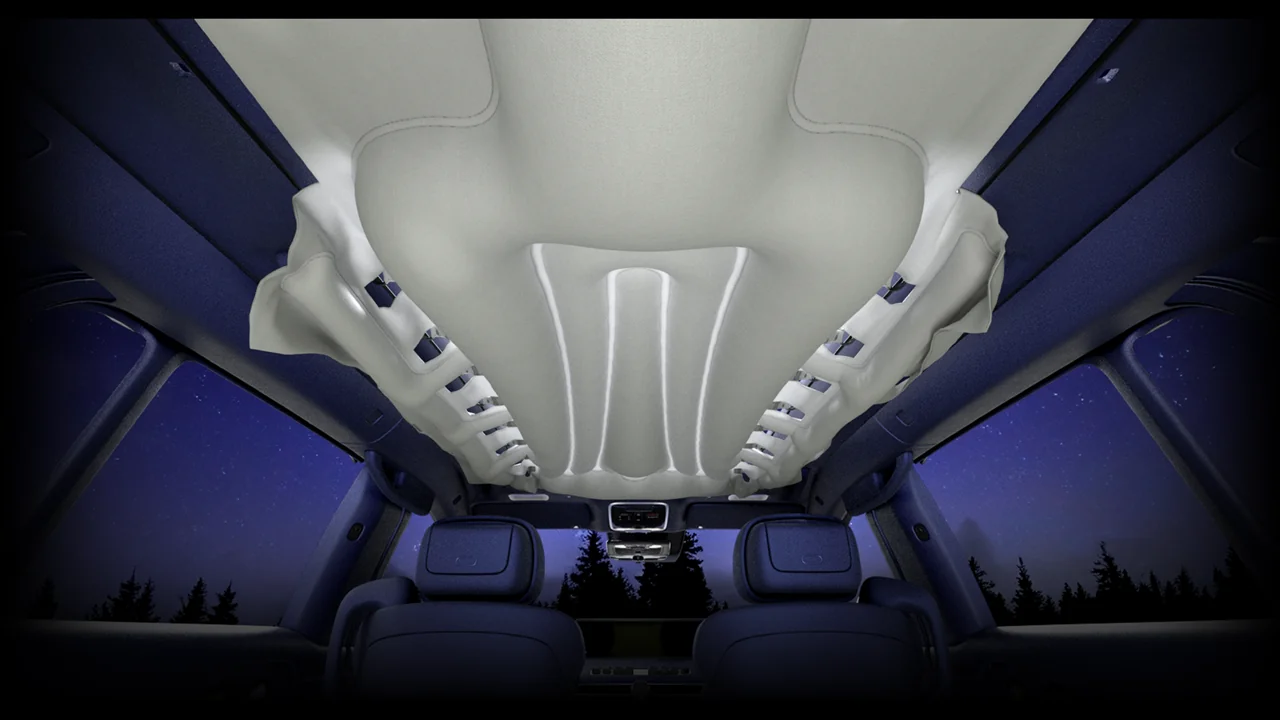
A big panoramic glass roof feels open, but in a rollover, occupants can hit the glass or be thrown out of the car. To cut that risk, Genesis introduced what it calls the world’s first roof airbag for a production car.
When the car senses a rollover or crash, an airbag unfolds from inside the headliner and covers 1,400 mm (55 in) of glass in 0.08 seconds. It runs along wire guide rails in a spring-loaded housing, so it deploys reliably whether the sunshade is open or closed.
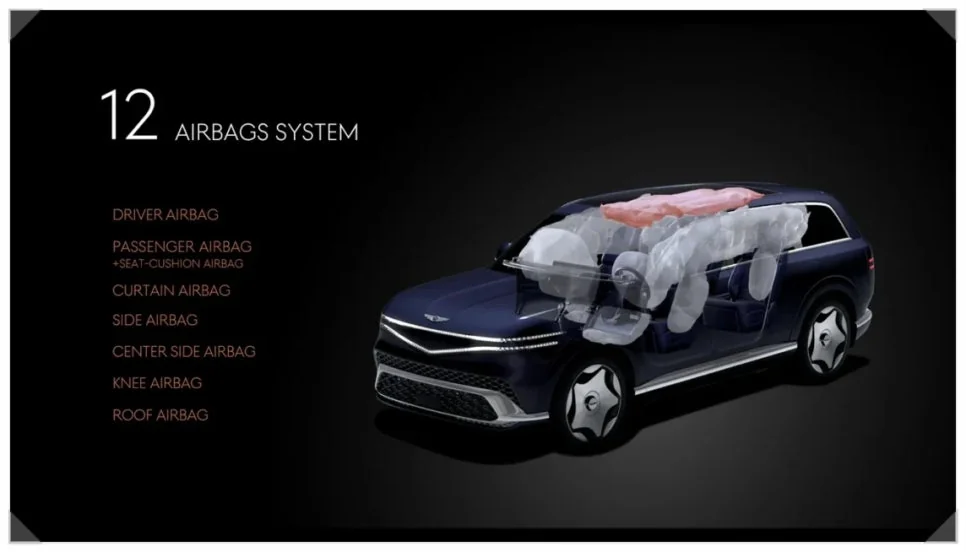
To prove it, Genesis ran rollover tests at a US proving ground, towing cars to 110 km/h (68 mph) and rolling them more than 180 degrees. The program used 40 test vehicles and more than 300 component tests.
A mechanical emergency release lets occupants open the doors even if the power is cut, and the flat floor makes it easier to climb out. The design covers the escape after a crash, not just the moment of impact.
eMP platform and ride
The GV90 rides on eMP, Genesis’s platform for flagship EVs. With no center tunnel, the floor is flat and the cabin roomier.
The drive motor gets vibration control too: current is adjusted to create a force opposite the motor’s own vibration, which cuts it by up to 40% and keeps more of it out of the cabin.
Door glass carries acoustic film twice as thick as before to block outside noise, and a multi-chamber air suspension soaks up bumps. A dual e-LSD shifts drive force between the left and right wheels for cornering and changing surfaces.
The aim is a flagship SUV that rides and handles as well as its cabin is roomy.

When the GV90 arrives, and what to look for
Genesis is aiming for an early 2027 launch of the Genesis GV90, and trims and pricing are not final. The Tech Day showed what it took to drop the B-pillar and still keep the body stiff and safe.
What I’m looking forward to most is how completely the production Genesis GV90 delivers on what Genesis showed at Tech Day.

Related reading
- Waymo Robotaxis and Atlas Robots: Why Hyundai Brought Both to Its Georgia Plant
- VW ID. Tiguan Revealed: What's New in the ID.4's Electric SUV Successor