iPhone Duo Screen Cracks: Is the Hinge to Blame?
Key takeaways
- Some iPhone Duo inner screens cracked at the fold within days of the Oct. 23 launch.
- Teardowns point to the hinge’s center support bar; Apple hasn’t named a cause but offers replacements.
- With AppleCare+, inner display damage costs $99 in the US; waiting two to three weeks is reasonable.
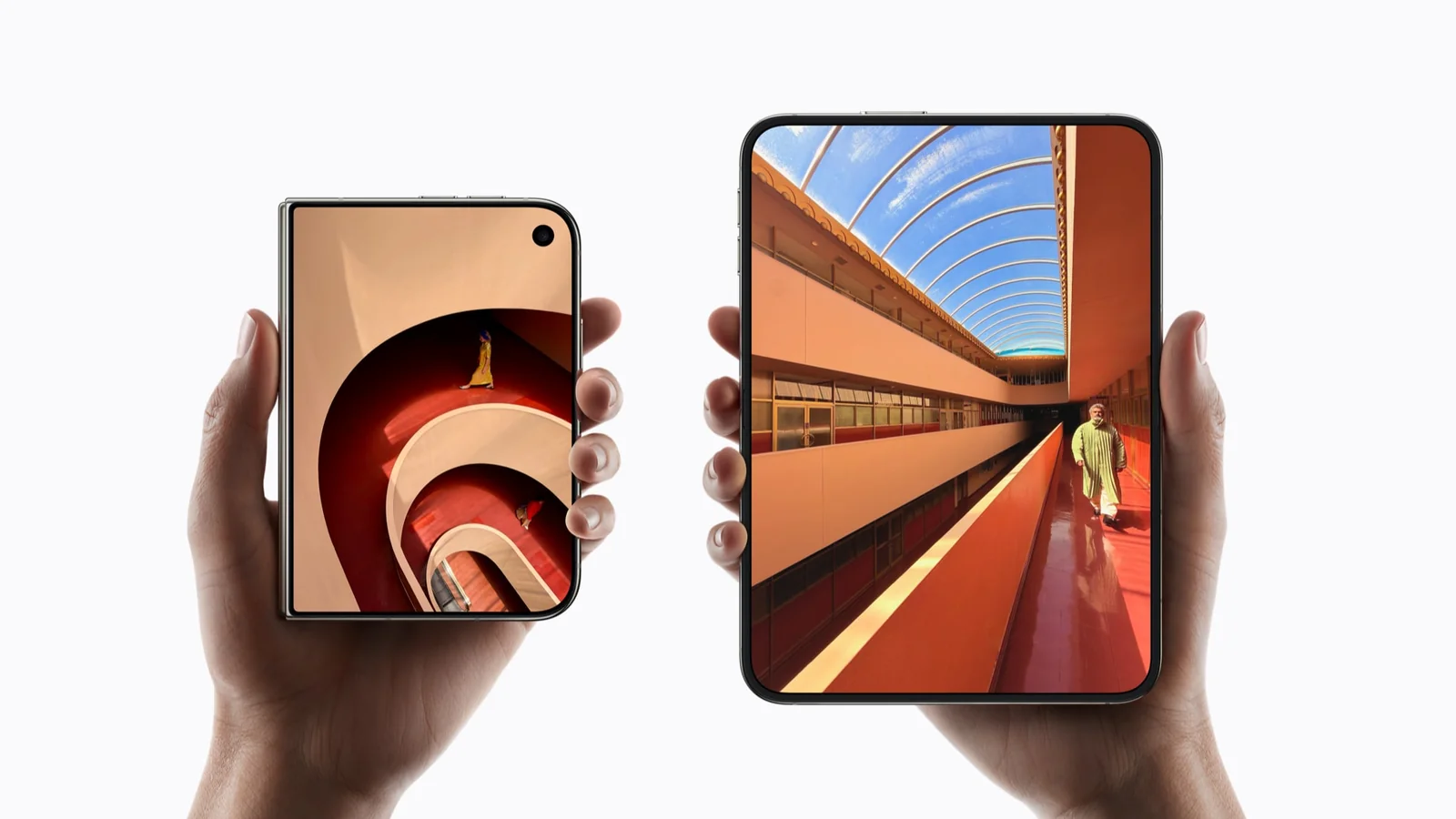
Apple’s first foldable phone, the iPhone Duo, went on sale Oct. 23, according to Apple’s launch announcement, and within three days owners were posting photos of an iPhone Duo screen crack along the fold. Some say the inner display split or grew lines after only a few folds. At $1,999 for the 256GB model, that stings.
Several units have cracked in nearly the same spot along the fold, which raises the question of whether the hinge itself is the problem. It could be an early batch defect or a design flaw, so below are the damage reports, durability tests and teardown findings so far.
A screen that cracked six hours after purchase
The first widely shared case came from a buyer in Melbourne, Australia. The phone was less than six hours old and had been unfolded fewer than 20 times when the inner display broke.
As it opened, something caught inside the hinge, then came a snap and the screen split. The Apple Store replaced it with a new unit free of charge. Korean YouTuber CuriousHagi shows the same kind of damage on another iPhone Duo in the video below.
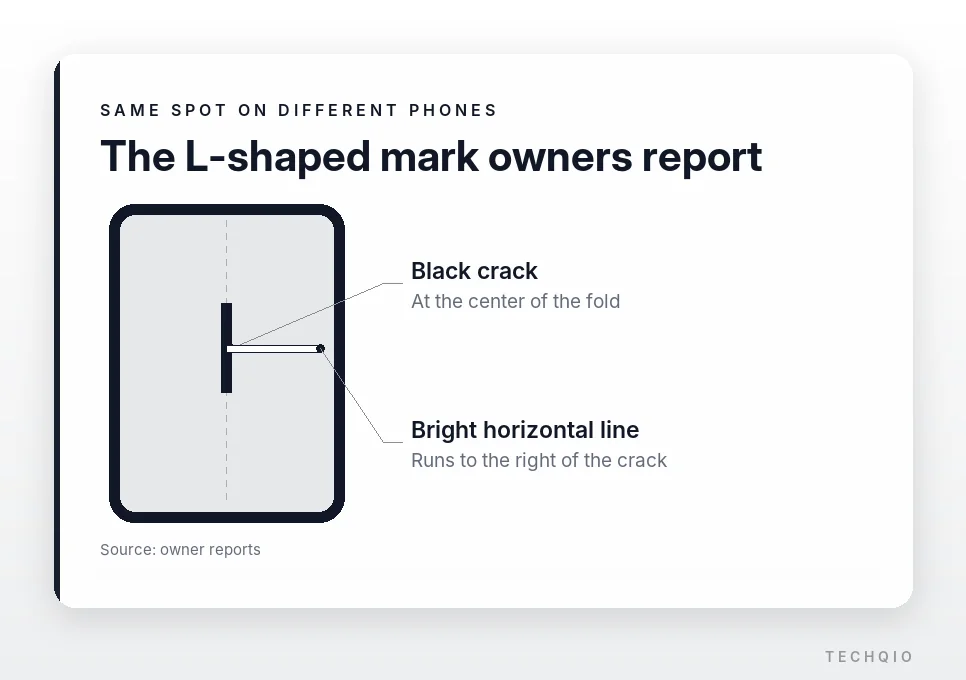
Other reports show the same pattern: a black crack at the center of the fold with a bright horizontal line running to the right, an L-shaped mark. Because different units fail in nearly the same place, many suspect an internal part is pressing on or rubbing against the screen.
What the durability tests showed
JerryRigEverything’s durability test also turned up hinge trouble. When sand went into the hinge gap and the phone was folded and unfolded, debris worked its way between the gears and the phone no longer closed all the way. Bending the screen backward then left a green line across the inner display, and touch stopped working properly.
The iPhone Duo carries an IP68 water and dust rating, but that doesn’t keep every particle out of a moving hinge. In iFixit’s fluorescent powder test, little debris reached the logic board, yet the hinge started making a gritty, grinding noise. Nobody runs tests like this in daily life. Still, it’s a letdown that small particles can get in the way of the hinge.
What’s behind the iPhone Duo screen crack?
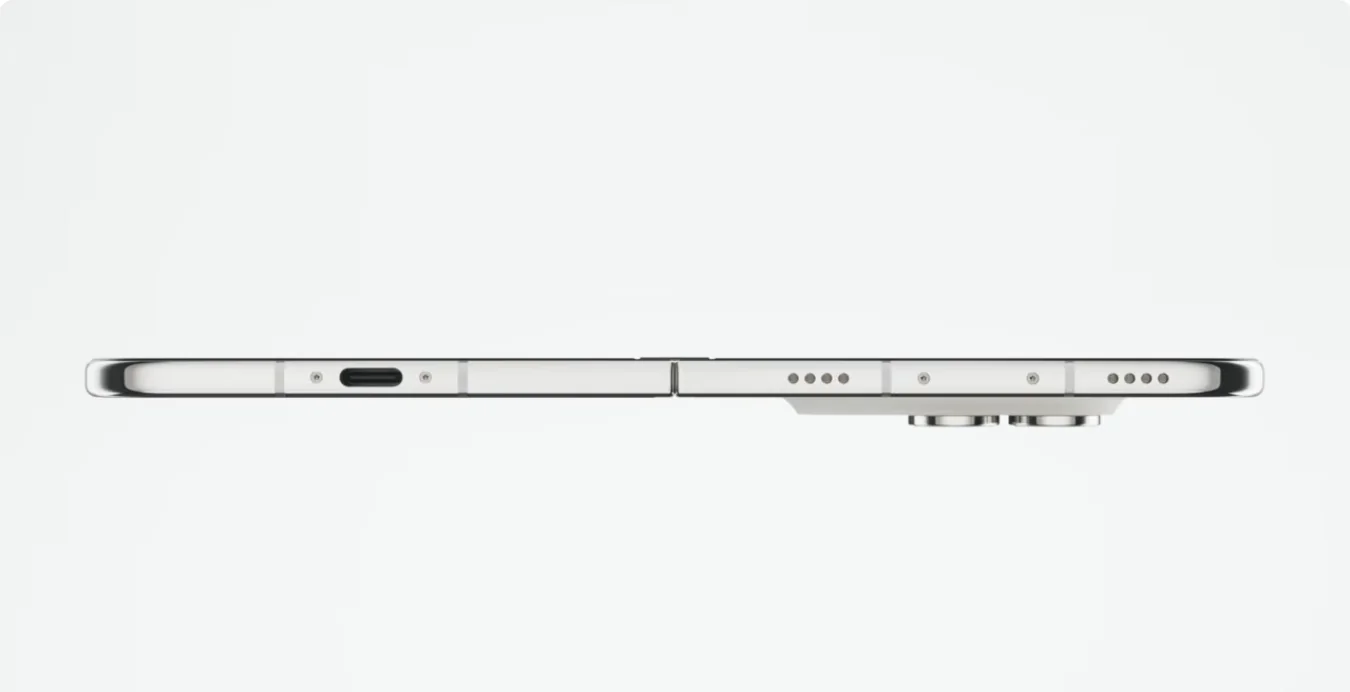
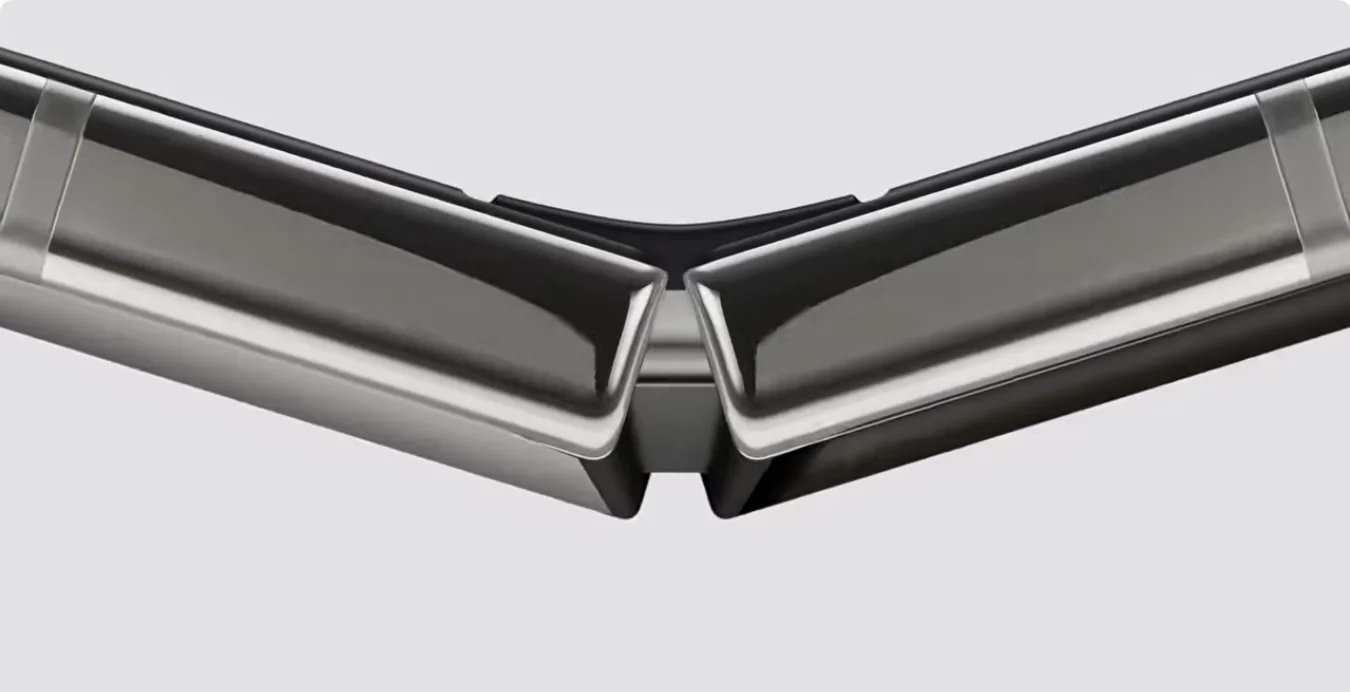
iFixit and CuriousHagi have both taken the iPhone Duo apart, and each focused on the center support structure that sits under the folding display. Apple’s own launch film shows that hinge up close; Apple says it is built from more than 100 components.
In iFixit’s 3D simulation, the center support bar doesn’t drop far enough when the phone closes. If that part doesn’t move as designed, it can push the folding OLED panel up from below. Pressure then concentrates on one spot of the screen, which can start a crack.
A second suspect: the curved rails
Another possibility is that the hinge’s curved rails touch the back of the display as they move. CuriousHagi’s teardown found a broken ring-shaped linkage at the center, along with marks suggesting something had struck the rear support plate.
The damage also clusters near the boundary between the cable slot and the support plate, which fits these theories. The design may not leave enough clearance for how the parts move, but Apple hasn’t confirmed a defect as the cause.
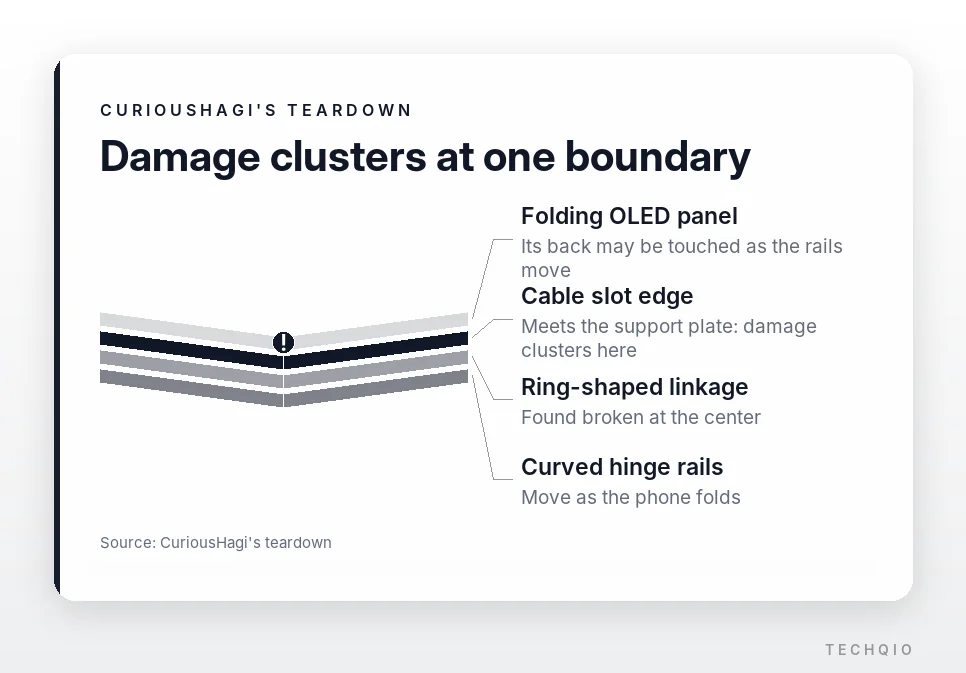
Which hinge parts are under suspicion
The durability questions also hit a hinge parts maker. Fine M-Tec, seen as a winner from Apple’s move into foldables, closed at ₩9,400 (about $7.10) on Oct. 26, down 15.70%. Worries about a hinge defect drove the drop.
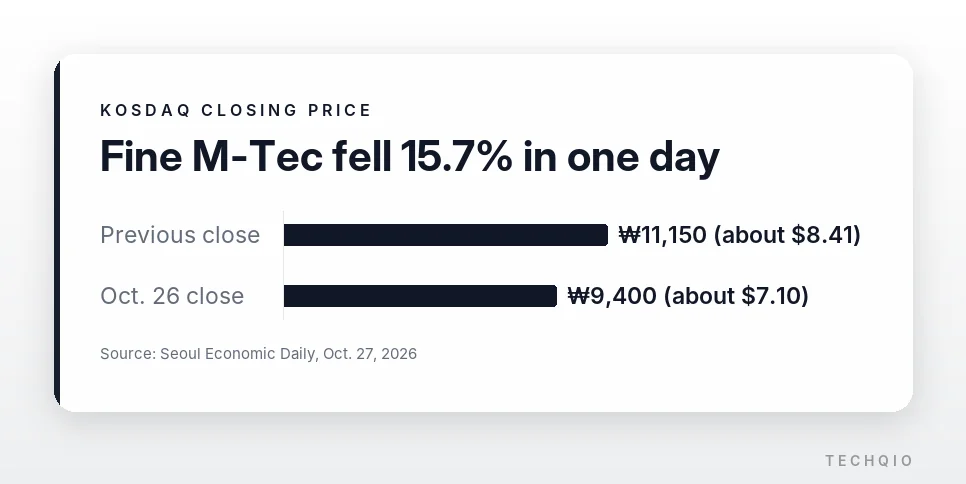
Fine M-Tec said its parts are not defective and have nothing to do with the quality problem. Not every hinge part does the same job, though.
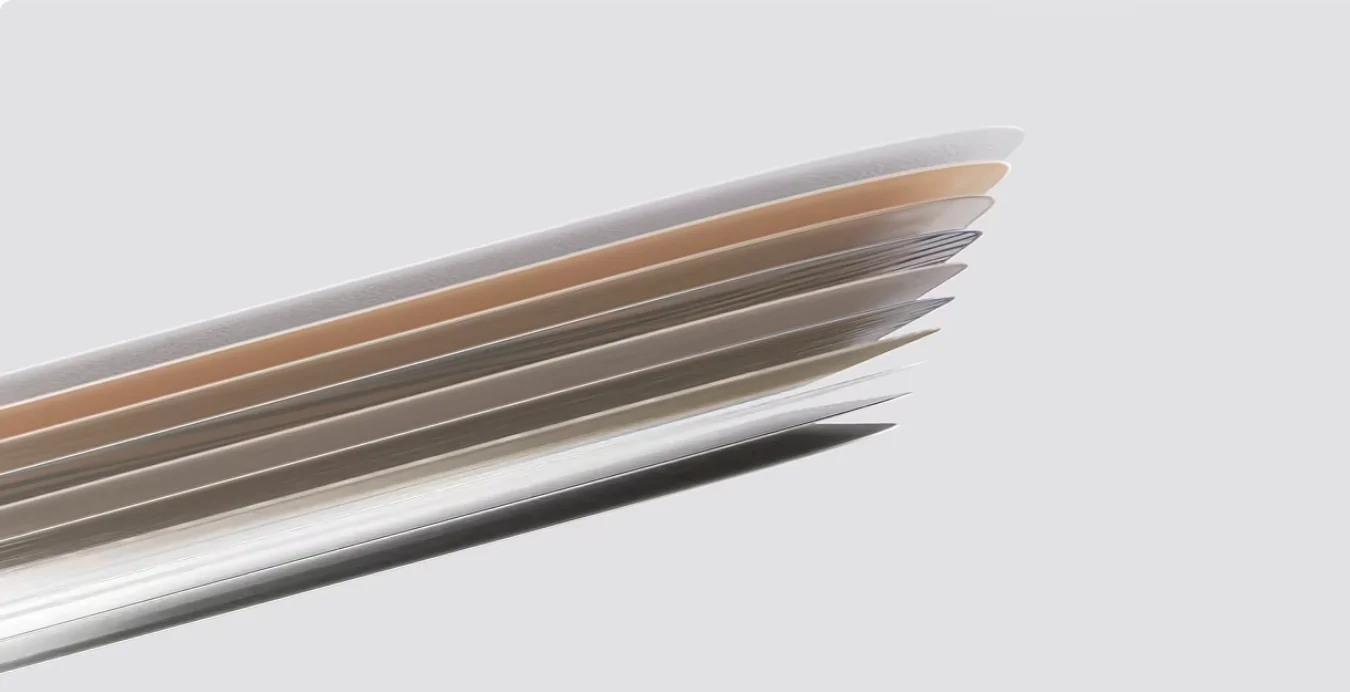
The inner hinge, or backplate, that Fine M-Tec supplies is a metal plate that supports the back of the screen and reduces the crease at the fold. In Apple’s own breakdown of the display layers, a titanium plate forms the bottom layer of the display stack, with the hinge underneath.
The outer hinge, the gears and pivot that actually fold and unfold the phone, comes mainly from Taiwan’s Shin Zu Shing and US-based Amphenol. Apple also used a 3D-printed titanium hinge cover to get the phone down to 5.2 mm (0.21 in) unfolded.
With so many parts moving in such a tight space, it’s too early to say which one is at fault. CuriousHagi’s durability video below takes a blade to that hinge cover.
How Apple has responded
Apple hasn’t acknowledged a structural defect in the iPhone Duo or announced a recall. On Oct. 26 Apple said it is “aware of an issue impacting the inner display on a small number of iPhone Duo units” and that affected owners should contact AppleCare for a replacement, according to 9to5Mac.
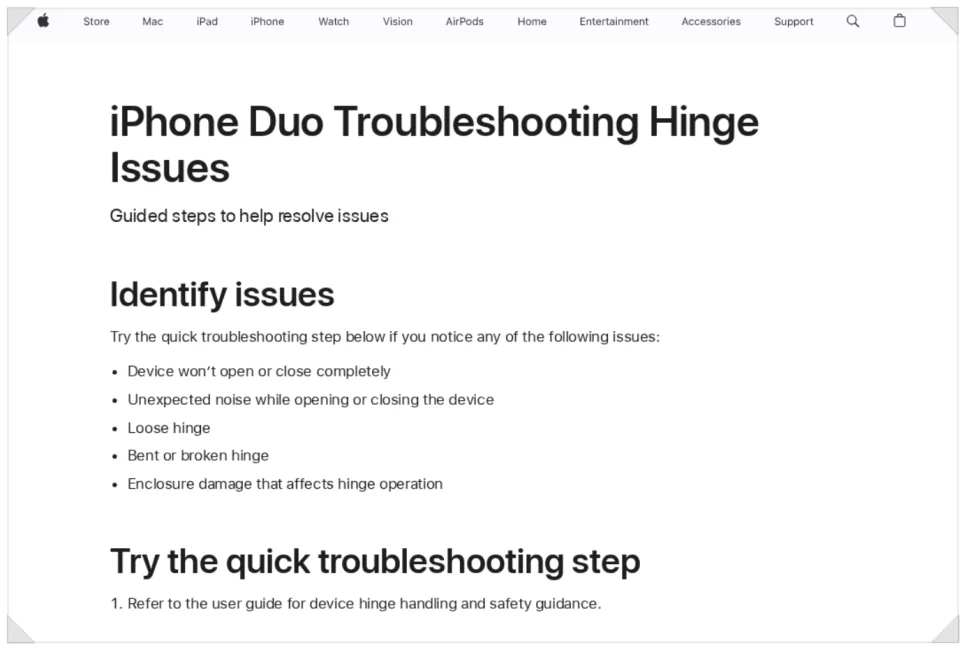
Apple’s guide to troubleshooting iPhone Duo hinge issues (document 148323) explains how to check a hinge that catches. Once lines or cracks appear on the screen, software can’t fix it, and the display has to be replaced. Apple’s hinge troubleshooting article lists the symptoms to watch for:
- The phone won’t open or close fully
- It makes unexpected noise when folding
- The hinge is loose, bent or broken
Apple notes there are no diagnostics or software remedies for hinge issues.
What an inner display repair costs
If Apple treats a failure as an early defect, the phone is swapped for free. If the damage is judged to be the owner’s fault, an inner display repair costs $999, half the price of the phone. These are Apple’s US repair estimates for the iPhone Duo:
| Repair | Without AppleCare+ | With AppleCare+ |
|---|---|---|
| Inner display | $999 | $99 |
| Outer display | $379 | $29 |
| Cover layer | $49 | $19 |
| Other damage | $1,499 | $99 |
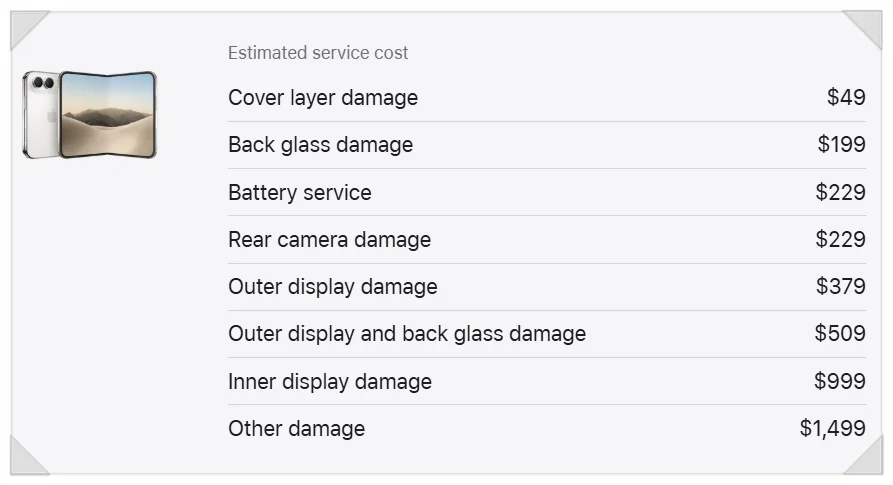
AppleCare+ cuts the inner display fee from $999 to $99. Apple doesn’t list the plan’s own price for the iPhone Duo on its AppleCare page, so check it at checkout before deciding.
How it compares with the Galaxy Z Fold8
The iPhone Duo’s screen trouble recalls the first Galaxy Fold from 2019. Samsung has refined its hinge over eight generations since, adding sweeper brushes to keep debris out and reworking the pivot to handle repeated folding.
Apple, by contrast, built its first foldable around a thin profile and a nano-texture finish that softens the crease.
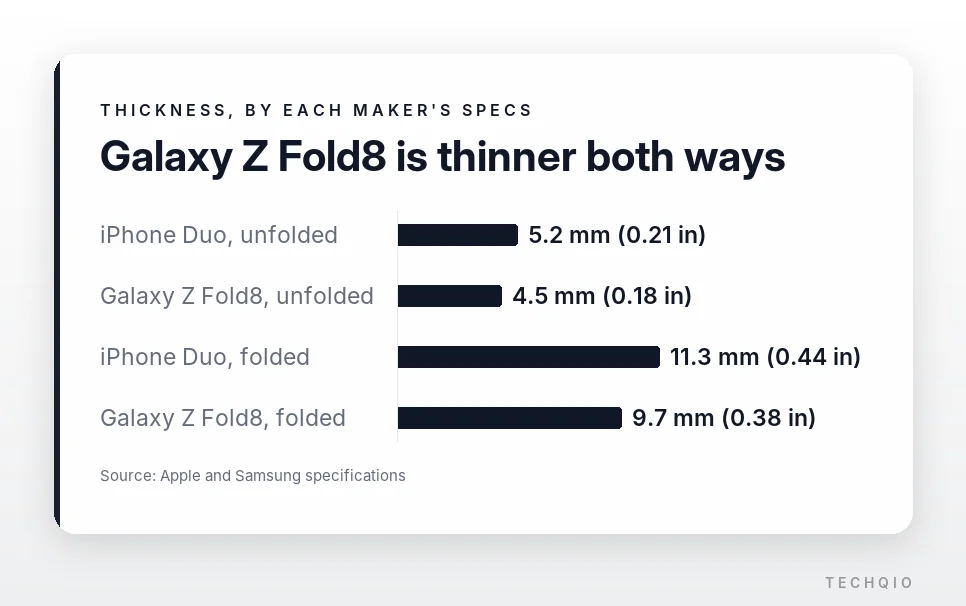
By Samsung’s own specs, the Galaxy Z Fold8 is 4.5 mm (0.18 in) thick unfolded, not counting the screen frame, and 9.7 mm (0.38 in) folded, against the iPhone Duo’s 5.2 mm (0.21 in) and 11.3 mm (0.44 in). Protecting the screen through repeated folds looks just as important as shaving off thickness.
App support differs too. Over several generations of the Galaxy Z Fold, Samsung has smoothed how apps carry over when you open or close the phone and kept improving split-screen and multitasking.
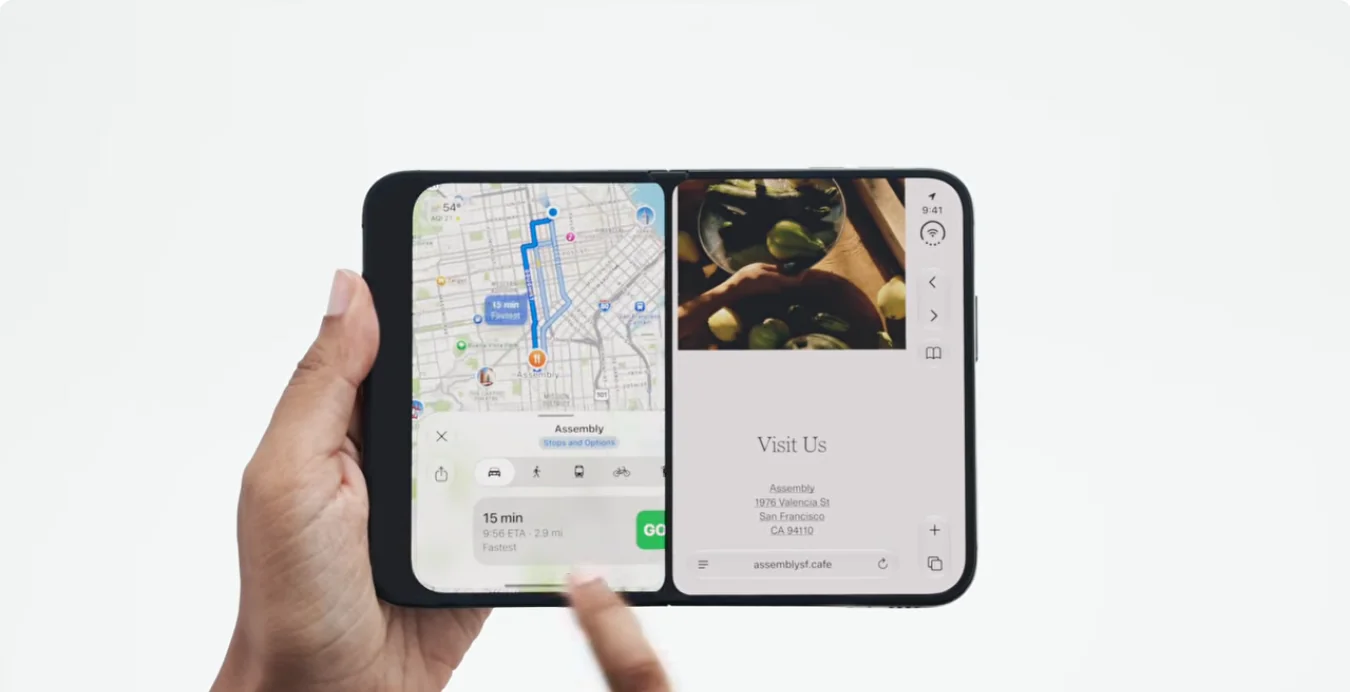
Apple’s launch film shows the layout apps are meant to reach: two apps side by side on the inner display. As Apple’s first foldable, though, the iPhone Duo still has rough spots. Some apps show the wrong aspect ratio or don’t use the wider screen well, so check that the apps you use most behave before you buy.
Should you buy an iPhone Duo now?
The iPhone Duo drew attention for its thin, new design, but the run of iPhone Duo screen crack reports right after launch has raised real durability concerns. The cause and the failure rate are still unknown, so if you’re on the fence, I’d wait two or three weeks before buying.
If you already own one, pay attention to any catching or odd noise when you fold and unfold it. If something feels off, stop forcing it and have an Apple Store check it. Keep Apple’s 14-day return window and the 60-day window to add AppleCare+ in mind; the same applies to both finishes, star white and night sky.